You've booked your go-karting session, and now you're standing in front of your closet wondering if those strappy sandals will get you turned away at the front desk. They will, and you're not the first person this has happened to. Track staff see it every week when flip-flops, flowing skirts, and loose hoodies trigger an on-the-spot refusal with no refund in sight.
This guide breaks down the go karting dress code that gets you cleared to race. Brands can develop custom karting apparel for different racing audiences.It covers what shifts between indoor and outdoor tracks, which rules are industry-standard versus venue-specific, and why proper shoes for go karting matter more than you'd think. Screenshot the three-minute checklist at the end, and you'll never show up unprepared again.
Start With the Four Must-Haves: Closed-Toe Shoes, Secure Pants, Fitted Clothing, and Tied-Back Hair
Four items make or break your entry at the gate. Nail these, and the rest of the go-karting dress code is straightforward.
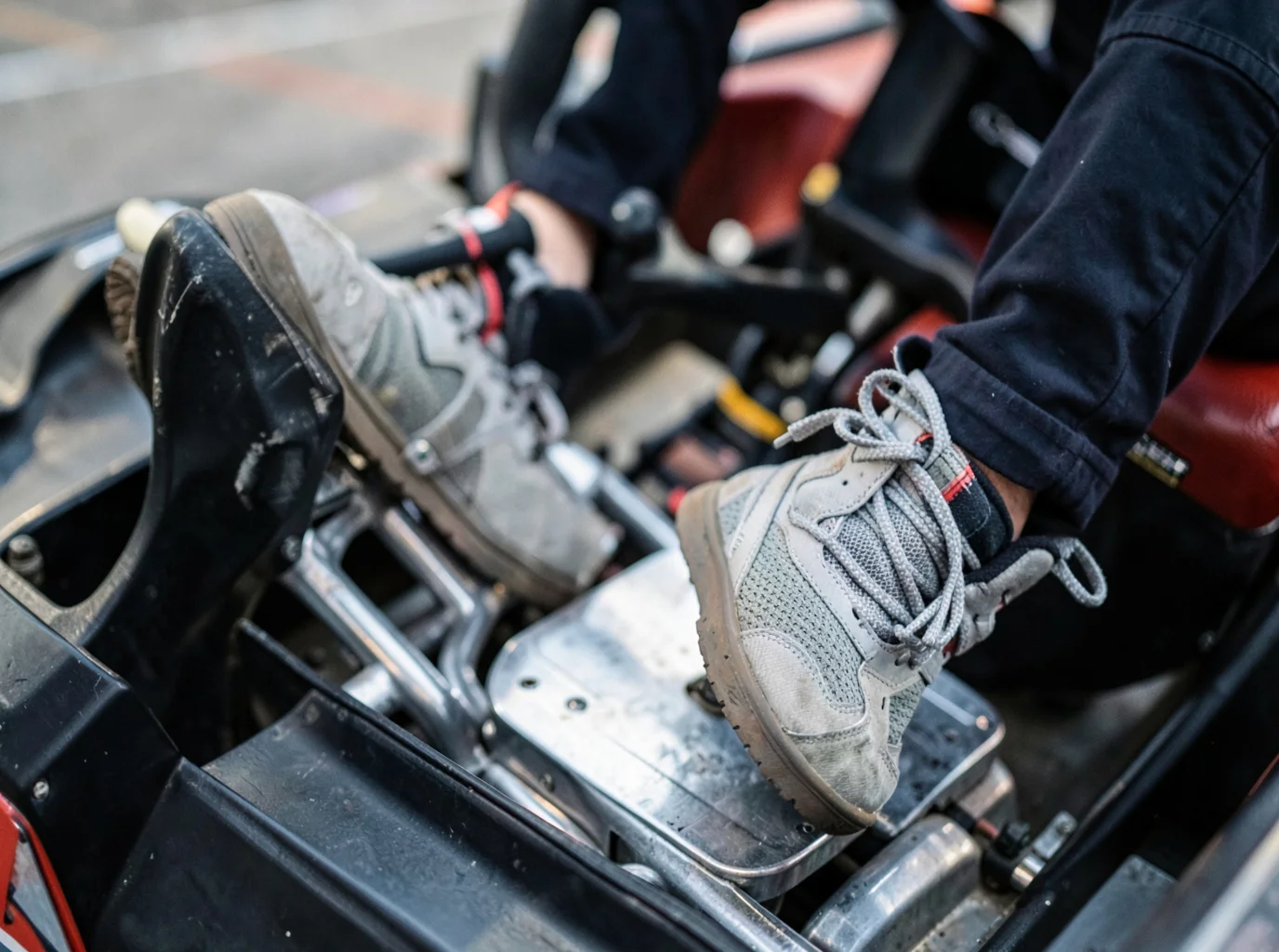
Closed-toe shoes come first. This is a strict safety rule. OSHA training materials require sturdy, closed-toe footwear around equipment with moving parts, and go-karts qualify. The shoe must enclose your entire foot, heel included. Sandals, flip-flops, clogs, and anything with cutouts or open backs get rejected at check-in every time. Regular sneakers or flat-soled closed shoes work fine. You do not need racing boots for a casual session.
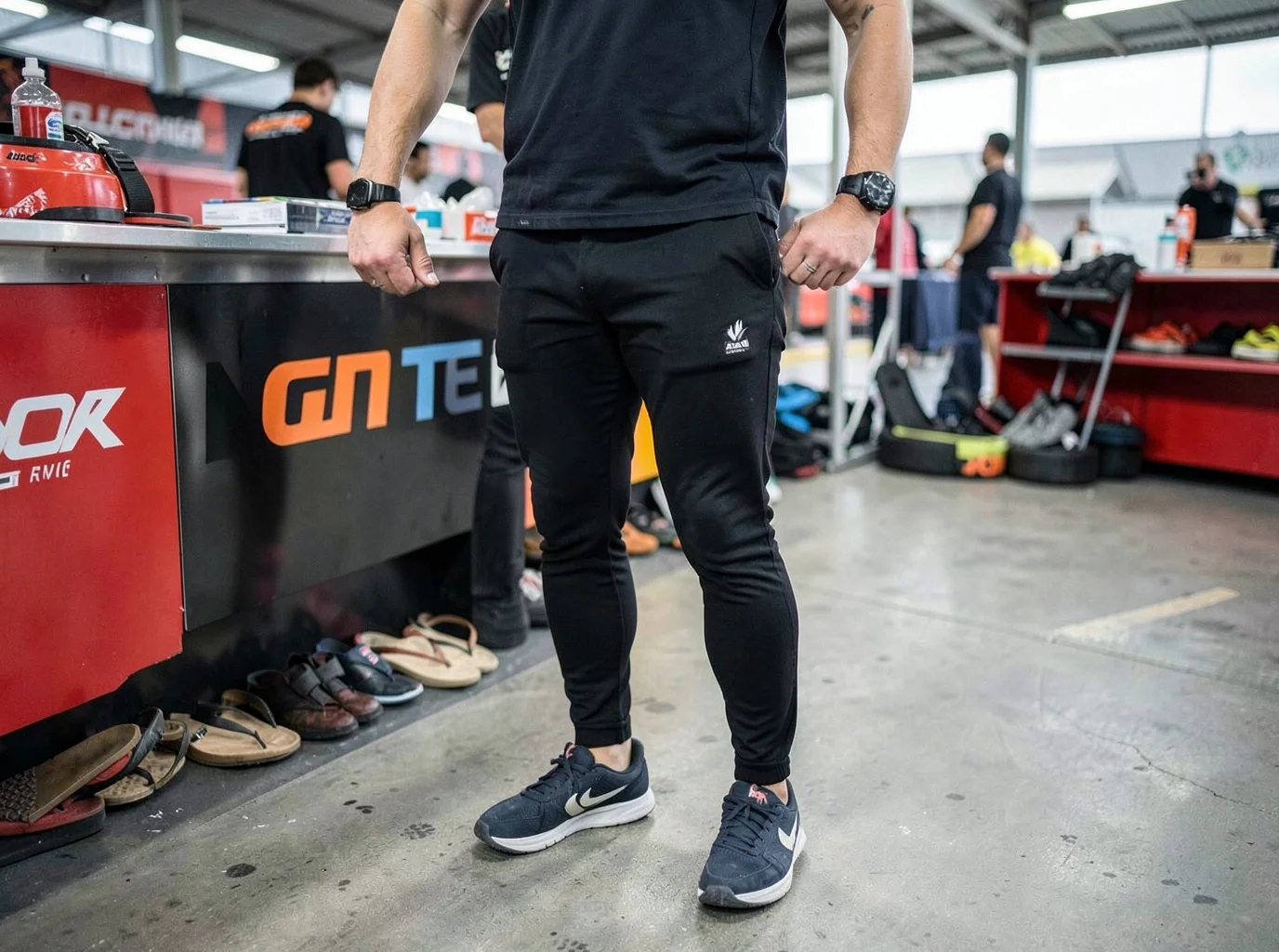
Secure pants are next. You need long pants that reach your ankles whether you stand, sit, or reach for the pedals. Full-length jeans and fitted utility pants both pass. Shorts, skorts, cropped trousers, and short skirts get turned away because track rules prohibit any bare skin between your hem and your shoe. Staff watch how your pants fit when you sit in the kart seat, not only when you check in at the counter, so make sure your cuffs still cover your ankles when seated.
Fitted clothing keeps you clear of moving machinery. Your shirt and pants need to cover your shoulders, torso, and legs without gaping or flapping while you drive. Loose fabric creates a serious hazard. Oversized hoodies, floppy sleeves, untucked scarves, and dangling cords can catch on moving parts and pull you toward the engine components. A close-fitting T-shirt, polo, or work shirt is your best choice. A karting apparel manufacturer can customize team uniforms and fabric options.Skip anything that billows when you move your arms.
Tied-back hair rounds out the list. If your hair falls past your shoulders, secure it before stepping onto the pit lane. A ponytail, bun, braid pinned against your head, or a cap all work. Loose hair longer than shoulder length is an entanglement risk around rotating equipment, and most tracks will turn you away at the helmet fitting if it hangs loose.
Run through this list before you leave the house: enclosed shoes, full-length pants, a fitted top, secured hair, and no dangling jewelry or loose accessories. Clear those four requirements, and you will walk through the gate without a second look.
Indoor Go-Karting Clothing: What Usually Works at an Indoor Track
Indoor tracks run warm. The engines, lights, and body heat from a dozen racers circling a tight course all add up fast. Dress for that indoor heat.
The winning combo for indoor go-karting clothing looks like this:
A moisture-wicking T-shirt (skip cotton if you can, since it clings and stays damp)
Slim or straight-fit jeans, athletic trousers, or cargo-free work pants
Low-profile running shoes or sneakers
A thin sweatshirt if the venue runs cold, though most facilities stay warm
Hair tied back, with no scarf or dangling accessories
This setup covers your arms and legs, keeps your feet secure, and avoids extra fabric that traps heat or snags on equipment. You will stay comfortable through a full session without overheating under the helmet.
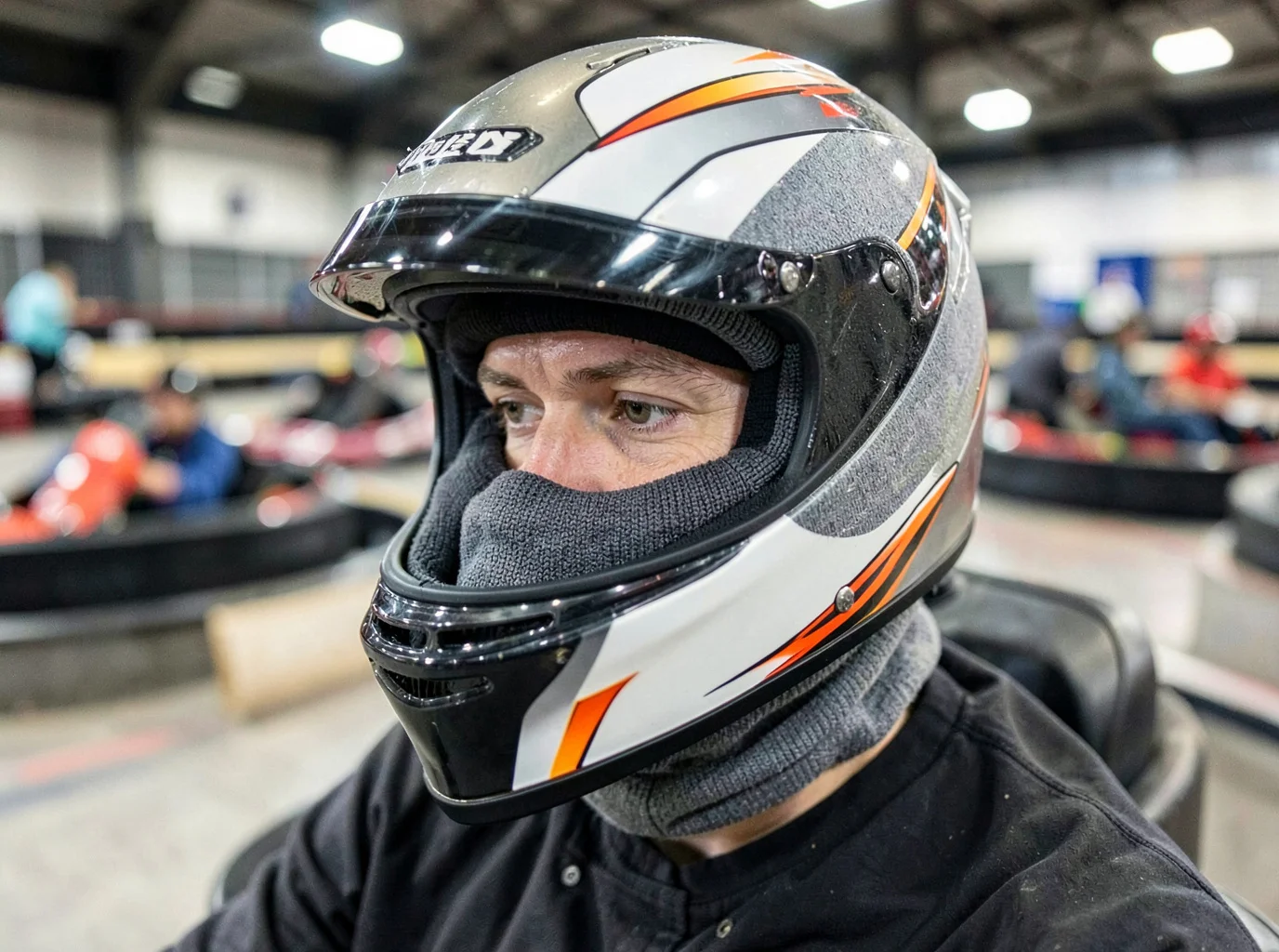
On helmets: indoor facilities almost always supply a full-face helmet as part of the booking. Get the size right—too loose and it shifts during turns, too tight and you will be distracted the whole race. Fasten the chin strap every time, no exceptions. Some venues hand out a disposable hairnet or head sock to wear underneath, which also solves the "where does my hair go" problem for long-haired racers.
On gloves: most indoor rental karting doesn't require them. Thin karting or motorcycle-style gloves help with grip if your hands sweat under pressure, but they are an optional extra.Teams can source wholesale karting gear for coordinated race-day kits.
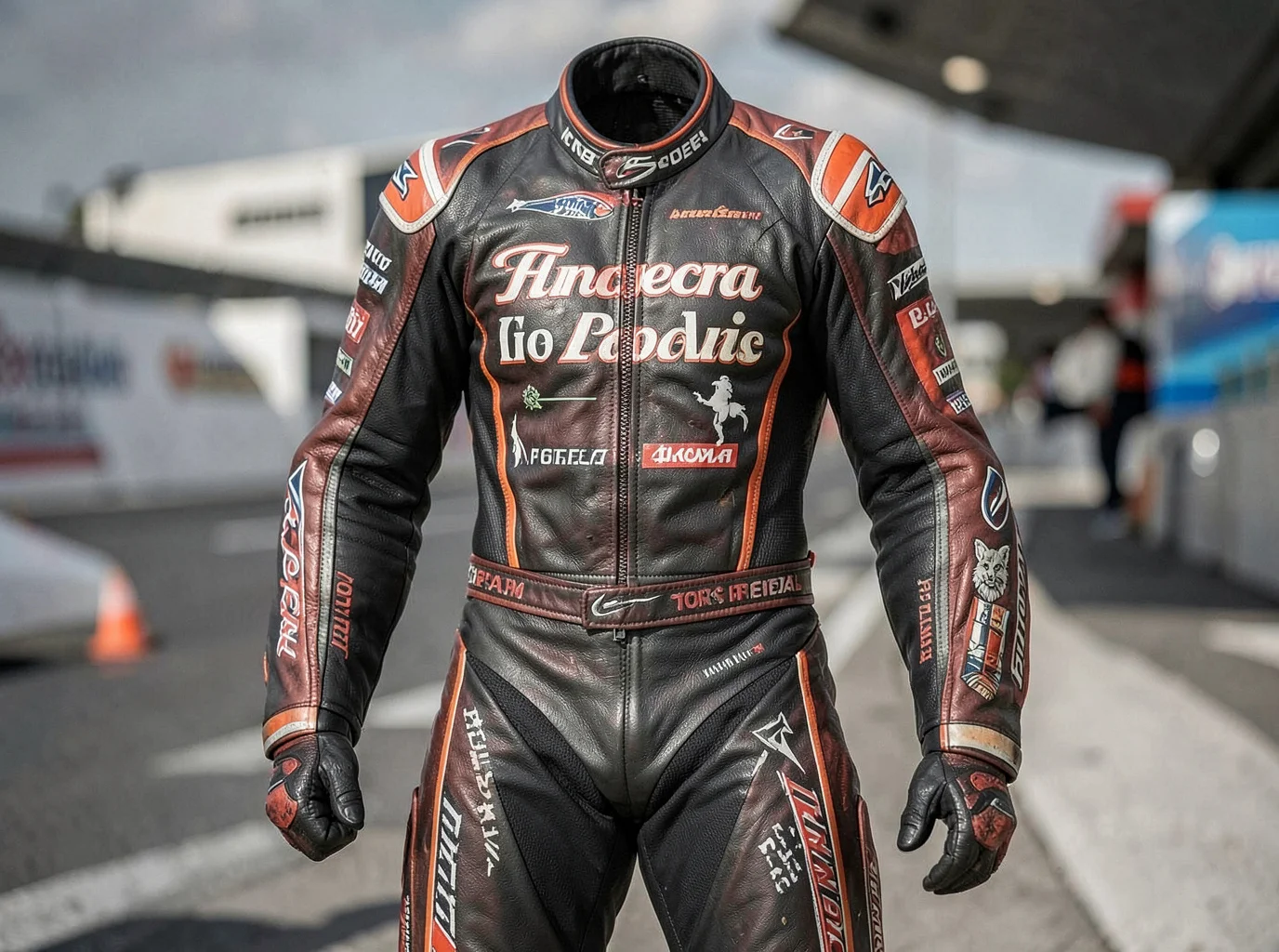
Skip the racing suit. Indoor rental sessions do not need one. Save the suit for competitive leagues and FIA-sanctioned racing.Ask a Go-Karting suit supplier about available designs and sizing.
Outdoor Go-Karting Gear: How to Dress for Weather and Longer Sessions
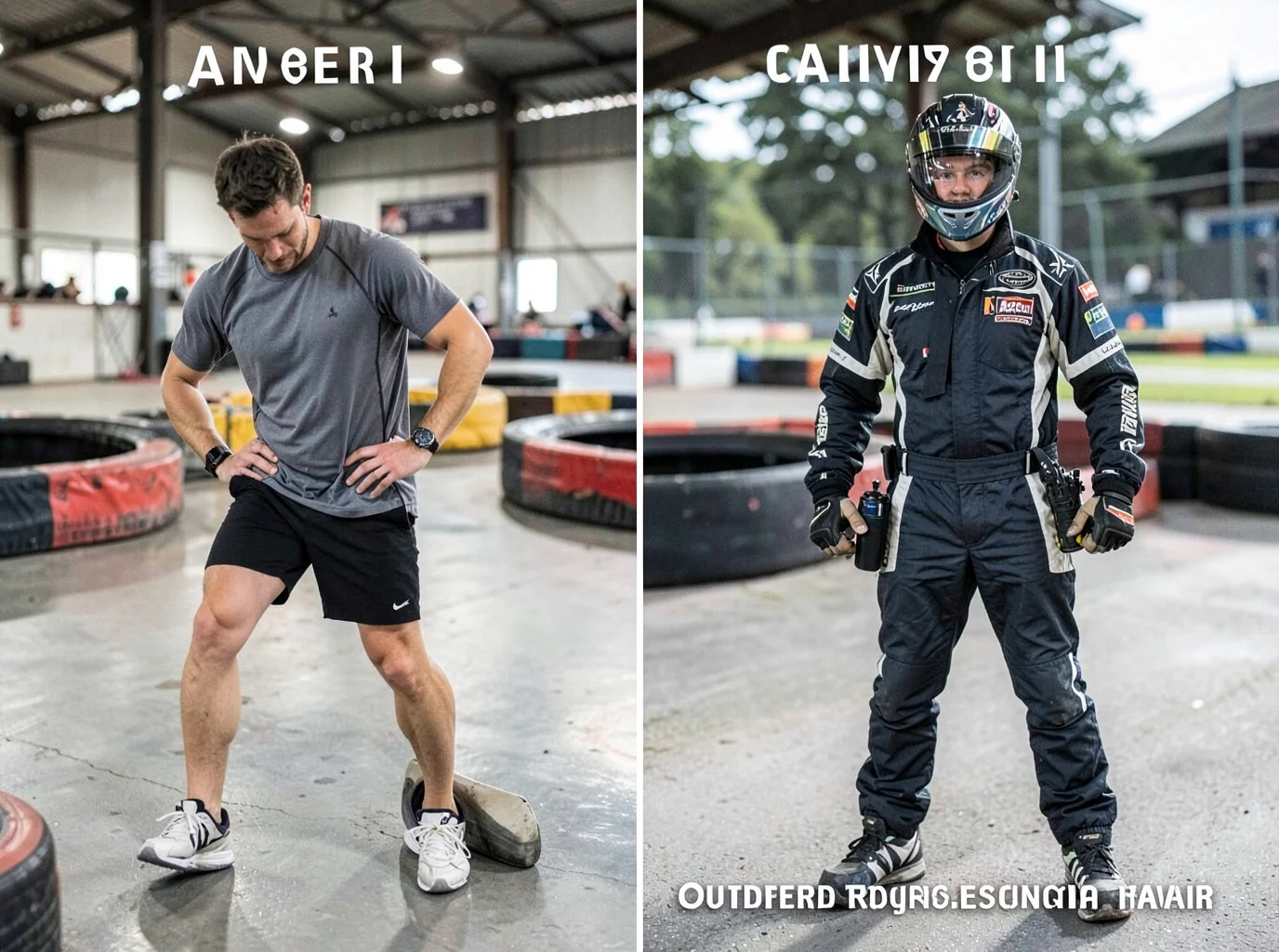
Outdoor tracks have no climate control, which changes how you pack. A 20-minute indoor run and a 90-minute outdoor track day require different gear.
Layer for the weather.
Cold mornings: Skip cotton. A synthetic or merino base layer under a thin fleece or thermal top keeps you warm without bulk. Leave heavy jackets and hoodies in your car, as they restrict your steering and bunch up against the seat harness.
Rain: Ask the track staff if they supply waterproof oversuits. If they do not, bring a packable rain shell, spare socks, a towel, and a second pair of shoes. Wet soles slip off pedals quickly, which becomes a real problem over a long session.
Hot weather: Pick lightweight, breathable kit: ventilated gloves, a moisture-wicking base layer, and water or electrolytes on hand. Heat and sweat ruin your grip and your focus by lap 15.
Wind: You feel the cold much more at speed than standing still. A thin windproof shell works well in the paddock, but remove anything with hard seams or pressure points before strapping in.Request a custom wholesale price for karting suits based on order volume.
Gloves matter more outdoors. Longer and competitive outdoor heats often require close-fitting karting gloves with full finger coverage and high palm grip. Bulk karting apparel helps outfit entire racing teams efficiently.
FIA Standard 8877-2022 is the benchmark many circuits use. Thin thermal gloves handle cold-weather driving, but thick gloves ruin your steering feel.
Sun gear: Apply sunscreen before you arrive. Bring UV sunglasses for the paddock and a cap for downtime, but never wear a hat under your helmet.
Before you launch: Sit in the kart first. Confirm your knees, ankles, shoulders, and wrists move without restriction, and tuck away any drawstrings or scarves so nothing can catch in moving parts.
Arrive 30–45 minutes early in cold or wet conditions to dry off, change clothes, and check your helmet fit before the driver briefing.
What Not to Wear Karting: Shoes and Clothing That Can Get You Refused
Track staff keep a mental list of outfits that trigger an automatic no, and it's longer than most first-timers expect. Knowing it in advance saves you a wasted trip and an awkward conversation at the front counter.
Footwear tops the rejection list. High heels get turned away at almost every venue because the heel ruins pedal control and can wedge under the brake. Platform shoes cause the same issue. Slippers and backless shoes fail inspection as well; tracks require a secure heel strap or laces, even if your toes are covered. Loafers and slip-ons often get flagged, particularly during competitive sessions where footwear must be laced, buckled, or fastened tight. If your shoe can slide off mid-lap, assume it's a no.
Loose and long garments are the second-biggest culprit. Scarves, ponchos, long coats, and oversized jackets with dangling cords all create catch points near moving parts. Long skirts, dresses, and harem pants appear by name on several track rule sheets because loose fabric near pedals or wheels is an immediate safety hazard. Bulky hoodies cause a separate issue by preventing helmets and harnesses from seating properly, so some operators reject them even though they cover your arms.
Jewelry and loose accessories round out the list. Necklaces, dangling earrings, bracelets, and watches should come off before you head to the pit lane, where loose items can snag on moving components. Long hair falls into the same category, and marshals will hold you at the helmet station until you tie it back.
Personal head coverings also get flagged at venues that supply their own helmets or balaclavas. If you wear your own hat or hood to check-in, staff will ask you to leave it in your bag.
Typical Front-Desk Refusals: High Heels, Long Dresses, and Flip-Flops
Front-desk staff don't make random calls. They work from a mental risk scale, and knowing where your outfit lands on it saves you a scramble at check-in.
Flip-flops sit at the top of the refusal list, no debate. Unlike heels or dresses, flip-flops carry zero gray area. Staff see an open heel, a rubber strap, and exposed toes, and that brings an automatic no. It doesn't matter how formal the rest of your outfit looks.
High heels fall into distinct risk tiers:
Low risk: closed-toe flats, polished loafers, or low block heels usually pass if the heel won't wedge under the pedal.
Medium risk: platform shoes or anything with a heel over an inch get a second look.
Higher risk: stilettos and thin heels almost always get turned away because they slide off pedals mid-lap.
Front-desk staff judge long dresses by fit. A tailored maxi dress with leggings underneath might pass inspection. A flowing sundress paired with sandals won't, because the loose fabric billows near the pedals and the open shoes fail the footwear check at the same time.
The combinations matter more than any single item. A long dress paired with flip-flops is an immediate double rejection. Cocktail-style flats under a fitted dress will often clear the gate. When in doubt, call ahead and ask what the front desk enforces that day.
Equipment the Track May Provide—and What to Confirm Before Leaving Home
Most karting venues hand you a helmet and call it done. Assuming that covers everything is how people end up scrambling in the parking lot five minutes before their session.
Call ahead and ask what is included. Helmet rental is standard, but certification is not universal. Many venues require a full-face helmet with a current Snell rating, like SA2015 or newer. Ask if their rental stock meets that standard and whether they have your size on the shelf. A five-minute phone call beats finding out at the counter that the only helmet left is two sizes too big.
Get it in writing when you can. An email or text confirming clothing rules, helmet standards, and gear requirements protects you if the front desk disagrees on race day. This matters most for outdoor go karting safety gear requirements, since rules swing much more between outdoor circuits than between indoor facilities.
Bring your own gear anyway. Gloves are the priority because tracks seldom stock them, and shared pairs are unappealing. Pack your own closed-toe shoes even if you are told the track has loaners; "loaner" often means flip-flops in a bin by the door. Bring a spare shirt if you run back-to-back sessions, since sweat-soaked cotton under a rental helmet gets uncomfortable fast.
One call settles it. Confirm helmet size availability, glove policy, and clothing rules together, and you walk in with zero guesswork.
The Three-Minute Go Karting Outfit Checklist to Screenshot
Save this checklist to your camera roll tonight, and you are set for race day.
Must-haves:
- Fastened helmet with the visor down (most rental tracks supply one)
- Flat, closed-toe shoes—trainers work fine
- Close-fitting T-shirt or long-sleeved top
- Long trousers covering your ankles when seated
- Hair tied back and tucked into a hairnet or cap
- Eye protection via the visor or track-supplied glasses
Leave at home:
- Sandals, flip-flops, high heels, or any open-toe shoes
- Loose skirts, wide-leg trousers, or bulky coats
- Dangling jewelry, bracelets, necklaces, scarves, or lanyards
Optional but worth packing: Gloves are not required for casual rentals, but they improve grip and prevent blisters during longer sessions. Dedicated racing gloves need full hand and wrist coverage, meeting FIA Standard 8877-2022. Neck protection stays optional unless track rules state otherwise.
The best all-round outfit: Wear a fitted athletic top, jeans or track trousers, thin socks, and flat trainers. This combination clears check-in at indoor and outdoor tracks without a second glance.
Final 10-second scan before you walk in: Helmet secure, visor down, shoes closed, hair tied, jewelry off, clothing fitted, and no loose fabric. Clear all seven, and you are through the gate.
Conclusion
Getting the go karting dress code right is simple, but unforgiving. Closed-toe shoes, snug pants, a fitted top, and hair tied back are non-negotiable, whether you're racing indoors under fluorescent lights or outdoors against the wind. Skip the flip-flops, skirts, and loose hoodies to avoid the awkward front-desk conversation where staff send you back to the car to change (or worse, hand you a refund instead of a helmet).
Screenshot the checklist above, run through it the morning of your session, and call ahead if anything about the track's rules seems unclear. Indoor and outdoor venues don't always play by the same playbook. A specialist karting suit manufacturer can support private-label racing collections.Five minutes of prep now saves you an hour of scrambling later.