You wear a balaclava for go karting as a hygiene barrier. I've watched hundreds of first-timers eye that thin fabric hood with suspicion, as if we're charging them extra for a glorified bandana. Fair question. That hood stands between your scalp and a helmet that has been on fifteen other heads this week. Tracks that skip them face lice outbreaks and helmets that degrade twice as fast, while complaints about overheating come down to cheap fabric. Here is the hygiene data, the helmet math, and whether bringing your own thin, moisture-wicking liner is worth it.
It’s Mainly for Hygiene: A Barrier Between Your Head and a Shared Helmet
The economics explain the mandate better than any lecture on germs. A disposable helmet liner costs us between $0.14 and $0.76 per unit, depending on bulk sourcing karting suit . Compare that to a replacement helmet, an extra cleaning shift, or a customer who posts a bad review after finding someone else's hair in their visor. The math is clear.
What That Balaclava Is Actually Blocking
Your scalp sheds hair, oil, sweat, and dead skin cells constantly. That buildup transfers directly to the next fifteen people wearing the same helmet this week. A thin fabric hood creates a physical barrier between your skin and the foam padding inside the helmet. It absorbs sweat before it soaks into the lining, catches loose hair before it sticks to the brow pad, and keeps your scalp from touching whatever the previous rider left behind.
Public-health guidance for shared sports helmets recommends cleaning the lining and using a disposable barrier like a shower cap or thin liner. Go-kart tracks did not invent this practice. We borrowed it from motorcycle rental shops, ski resorts, climbing gyms, and construction sites, where any business handing out shared head protection faces the same issue.
The Liner Formats You'll Actually See
Not every track uses the same style, but most rely on a few standard options:
Disposable rayon/polyester caps: thin, single-use liners tossed after your session.
Reusable polyester or mesh caps: washed and reused, sometimes made with antimicrobial fabric.
Shower-cap-style barriers: cheap, bare-minimum coverage for occasional riders.
Full helmet covers: these protect the shell's exterior without touching your scalp, so they do not replace an internal liner.
Karting suit Retail pricing on universal disposable liners lands around $2.73 per piece in small packs, while wholesale cycling and motorcycle suit listings run closer to $0.54–$0.76 per unit. Tracks buying in volume pay pennies to solve a real equipment maintenance problem.
Why Skipping It Backfires on Everyone
Skipping liners shortens the life of every helmet in the fleet and drives up customer complaints. Sweat and body oil degrade foam padding faster than normal wear. Standard rental operations require swapping liners between every customer, discarding used ones immediately, and inspecting helmets after each return for hair, sweat, makeup, sunscreen, and dirt. A liner keeps the padding clean enough that sanitizing the helmet remains manageable.
A Rental Balaclava Protects the Helmet—Not Just the Driver
At almost any serious karting track, you will see the same rule posted near the ticket counter: no balaclava, no rental helmet, no laps. Kart Centrum Lelystad mandates them for rental helmets strictly for hygiene. Schumacher's Motodrom does the same with its free rental lids, and the Michael Schumacher Kart Center hands you one at check-in. These tracks make the requirement clear because they need to protect gear that dozens of strangers put against their bare scalps every day.
According to C&M Karting, rental helmets get worn by "a lot of sweaty" people in a single day, and that moisture and odor stays trapped in the padding without a barrier. Skipping the hood to look better in photos leaves your head directly against that buildup.
Full Coverage Beats Partial Coverage
A proper rental balaclava covers your entire head, including your hair and ears, rather than stopping at the face. C&M Karting requires full-head designs because the hairline and the skin behind your ears sweat as heavily as your forehead. Partial liners leave high-sweat areas exposed to the helmet padding. A piece of fabric covering only the mouth and nose functions like a dust mask, leaving the helmet unprotected.
The Business Math Behind the Rule
Single-use non-woven balaclavas cost about $79.99 per 50 units, or roughly $1.60 each, from karting clothing suppliers marketing directly to rental tracks. Most venues charge customers between $3 and $5 per hood. That markup covers Go Karting Balaclava wholesale inventory, counter staff time, and the washable alternatives tracks maintain for repeat racers. Even with that margin, the low unit cost keeps the hygiene mandate practical for budget venues.
One Thing a Balaclava Isn't
A standard go-kart balaclava is separate from the fire-resistant gear required under FIA 8856-2018 for regulated motorsport. That standard governs heat transfer and flame resistance for racing suits and head gear in sanctioned competition. Recreational karting does not require that certification. Track-issued hoods are designed for hygiene.
The "Hot and Suffocating" Problem Usually Comes From the Wrong Fabric
Cheap, tightly woven polyester causes most complaints about suffocating helmet liners. When people hate wearing a head sock, the material is almost always the reason.
The Real Culprit: Air Permeability
Textile engineers measure breathability with ASTM D737, which tracks how much air flows through a fabric under set pressure. Tightly woven, dense, or coated materials score low on this test. Low air permeability traps heat directly against your skin, driving drivers to rip off a cheap balaclava after a single lap.
Regular polyester makes the heat worse because it barely absorbs moisture. In lab conditions at 37°C and 60% humidity, polyester wearers sweated earlier, felt warmer, and recorded higher pulse rates than cotton wearers in the same room. One tested sample of ordinary polyester had a wicking rate of 0 mm per 10 minutes, moving zero sweat away from the skin. That fabric gives helmet liners their stuffy reputation.
Not All Polyester Is the Same Polyester
Fabric choice makes or breaks performance here. Engineered moisture-wicking polyester, like Dri-FIT-style knit, uses shaped yarns and mesh construction to pull sweat outward so it can evaporate. Generic flat-weave polyester does none of that. It sits damp against your scalp.
Linen and lightweight Tencel or lyocell blends move moisture much faster. Georgia Tech researchers found linen's moisture-vapor transport rate beats both cotton and polyester by a wide margin. In lab tests, one recycled layered fabric reached 1,635 mm/s air permeability — the kind of spec a decent Go Karting apparel supplier can provide on request.
What a Quality Rental Balaclava Should Feel Like
A well-made helmet liner feels closer to a thin running cap than a ski mask. If a track hands you something thick, fleece-lined, or rubbery, that points to poor fabric sourcing rather than hygiene requirements. Ask the counter staff what material their liners use before assuming every hood runs hot.
When a liner feels suffocating, the issue comes down to low air permeability, poor wicking, or an overly tight fit pressing fabric against your skin.
Do You Need a Balaclava for Go Karting, or Can You Bring Your Own?
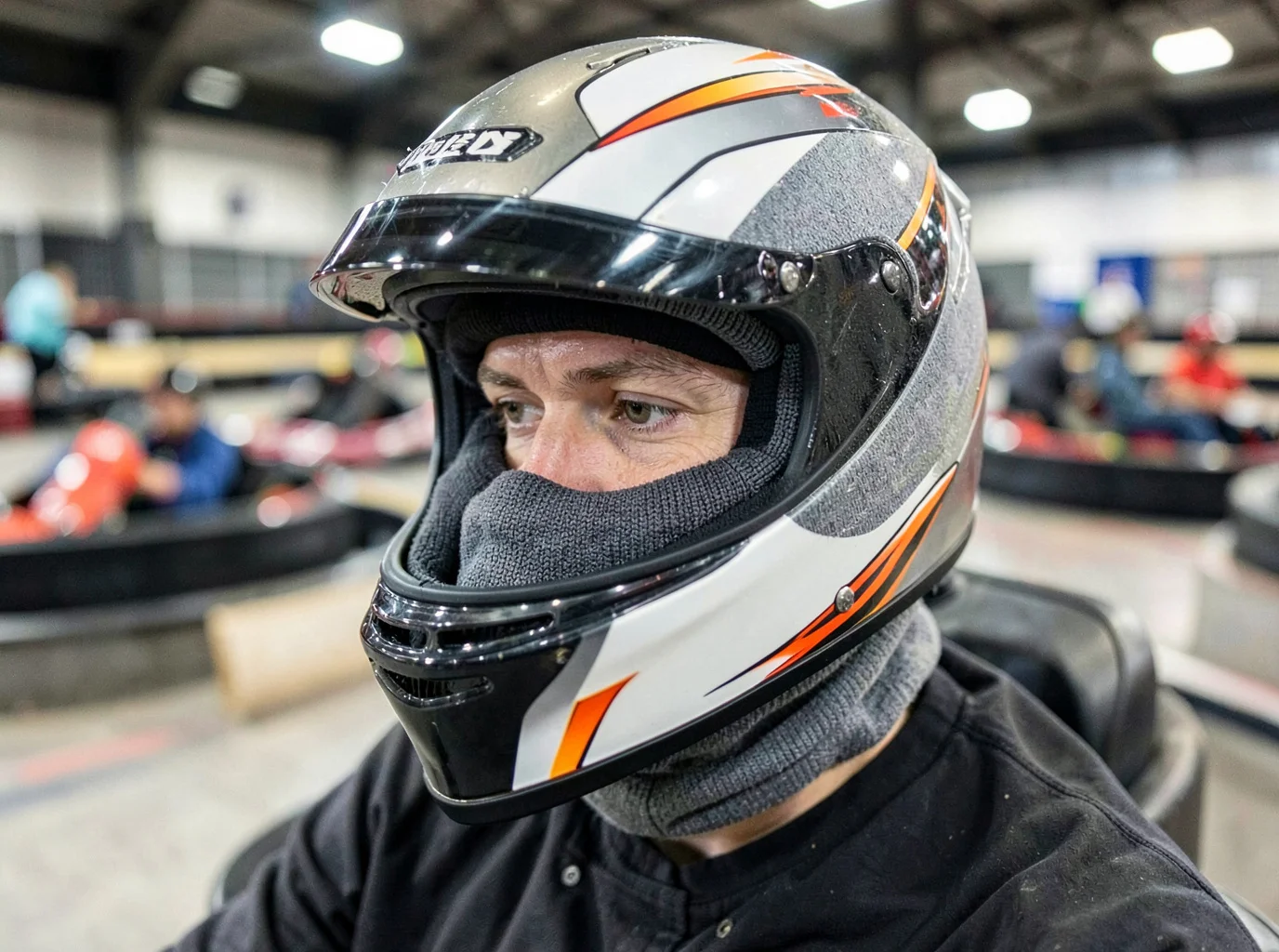
Bring your own if you can, and skip the counter purchase altogether. Most indoor and leisure tracks require a balaclava whenever you use a shared helmet, but almost none insist you buy theirs.
Tracks That Let You BYO
Check track policies directly. St Eval Kart Circuit makes balaclavas compulsory with venue helmets, but lets drivers bring their own. Powerarea Lemiers-Vaals requires one for hygiene and accepts personal gear. Plymouth Karting allows you to bring one from home or buy at reception. Schumacher's Motodrom hands you one if you borrow a helmet, but you can wear your own instead.
The Rental Math vs. Buying Once
Rental pricing in the UK runs from £1.50 to £6, with £3.99 standard at TeamSport locations. Full Throttle Raceway bundles gloves and a balaclava together for £4 total. Buy a decent balaclava once, and you stop paying that fee on every visit.
What to Actually Bring
A clean, close-fitting karting or motorsport balaclava
Lightweight, breathable fabric that won't bunch under a full-face helmet
Long hair tucked inside, which tracks check before clearing you to drive
One Caveat for Competition Drivers
Recreational sessions focus on hygiene and fit, but sanctioned motorsport is different. FIA rules define a balaclava as close-fitting and neck-covering, built to meet the 8856-2018 fire-protection standard. That novelty balaclava from a costume shop will not pass inspection at a regulated event.
Arrive 30 to 45 minutes early if you're unsure of a venue's specific rules, leaving plenty of time to buy one or pass the gear check.
Conclusion
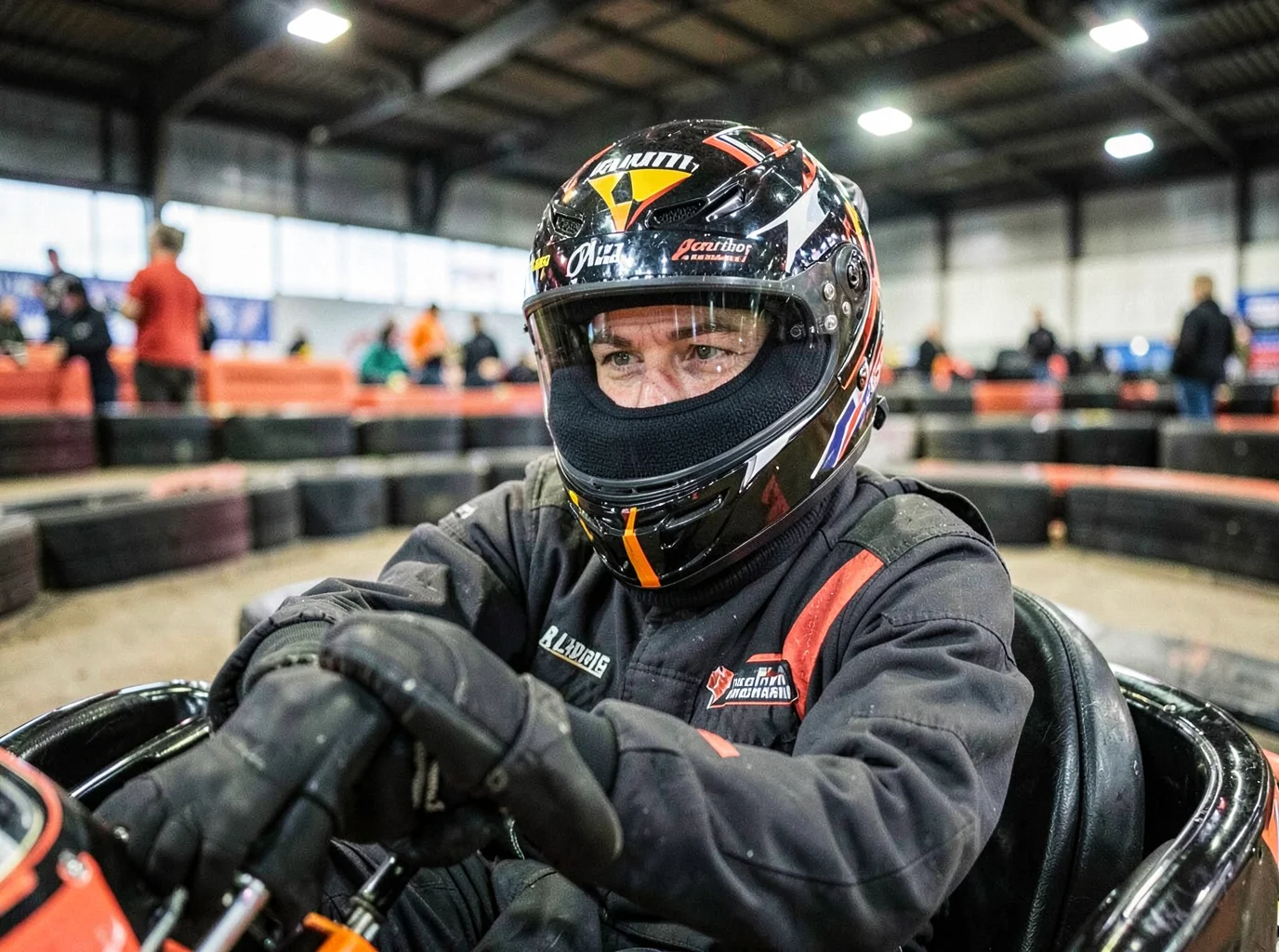
That balaclava keeps shared helmets clean and saves your hair from someone else's sweat. When people complain that liners feel hot or suffocating, the issue is almost always the fabric. A proper go karting helmet liner made from thin, moisture-wicking material breathes far better than bare plastic and foam pressed against your scalp.
Before you book, ask the front desk whether they hand out fresh disposable balaclavas or let you bring your own. Most tracks will tell you straight up. If you race regularly, buy a $5 lightweight karting balaclava online, toss it in your gear bag, and you will meet the track's safety rules without another thought. Suit up, strap in, and enjoy the drive.