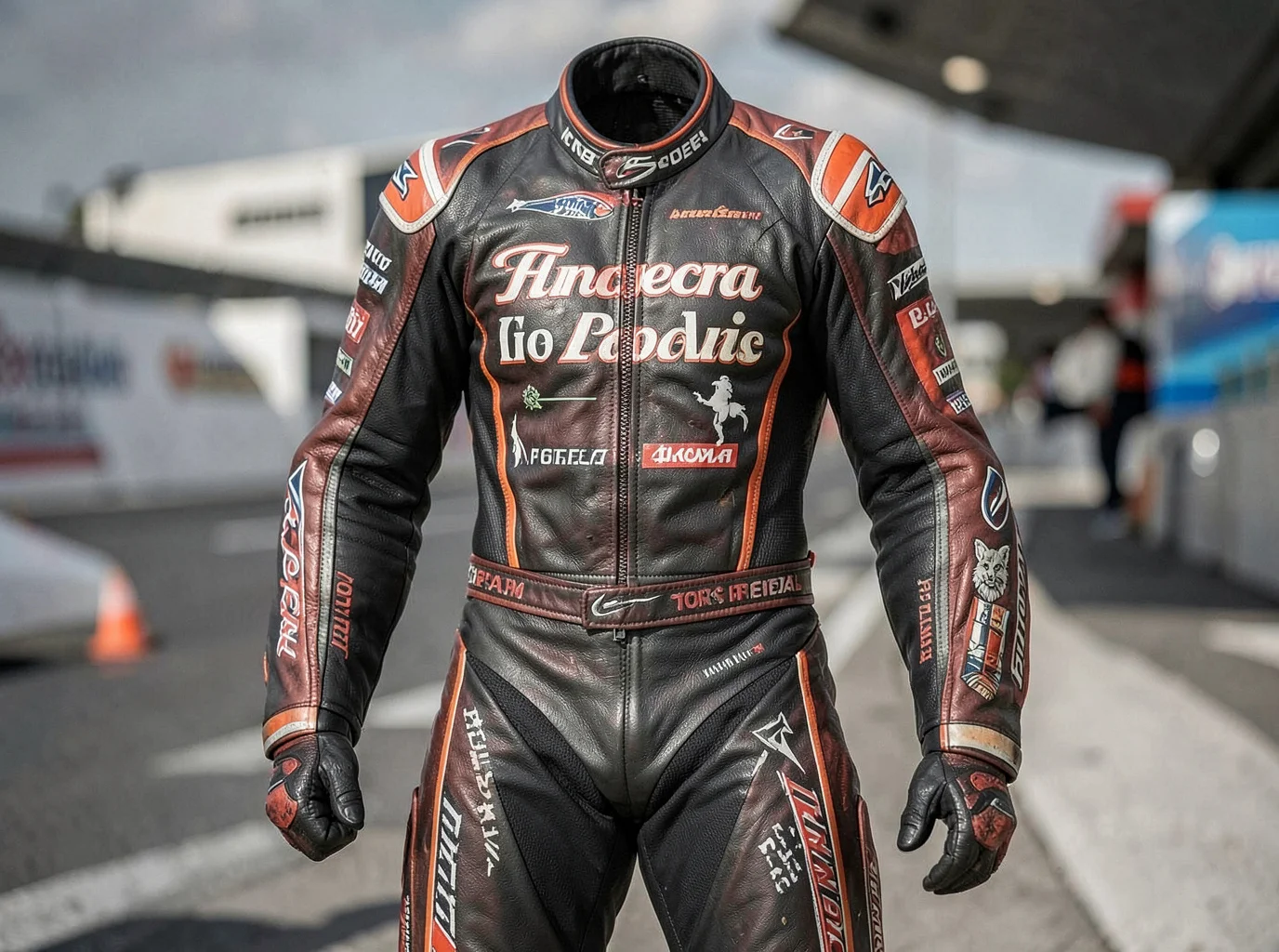
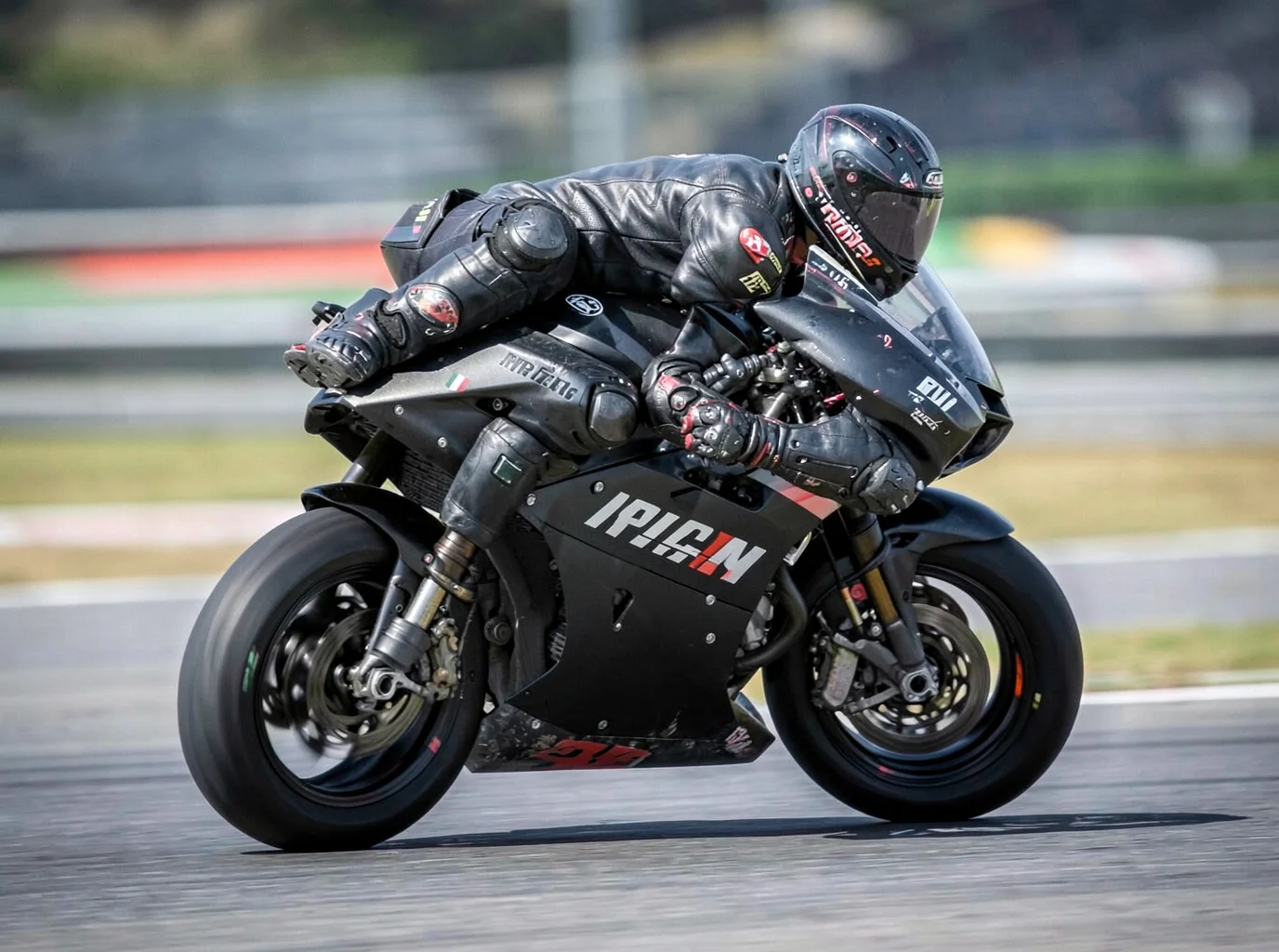
Slide into any track day paddock and you'll notice the fastest, most confident riders almost always wear Italian leather. It's physics. When you're dragging a knee at 140mph or picking up a bike after a low-side, the difference between Dainese racing suits and a bargain-bin alternative comes down to milliseconds of protection that actually matter. Not every Italian brand is built for the same rider. The Alpinestars vs Dainese debate you've been scrolling through is missing half the story, because SPIDI, Gimoto, and PMJ each solve very specific problems that the "big two" don't. This is a rider's breakdown of exactly which Italian custom leather motorcycle suits earn their price tag, and which ones are quietly better for your skill level, your bike, and your budget.
Dainese
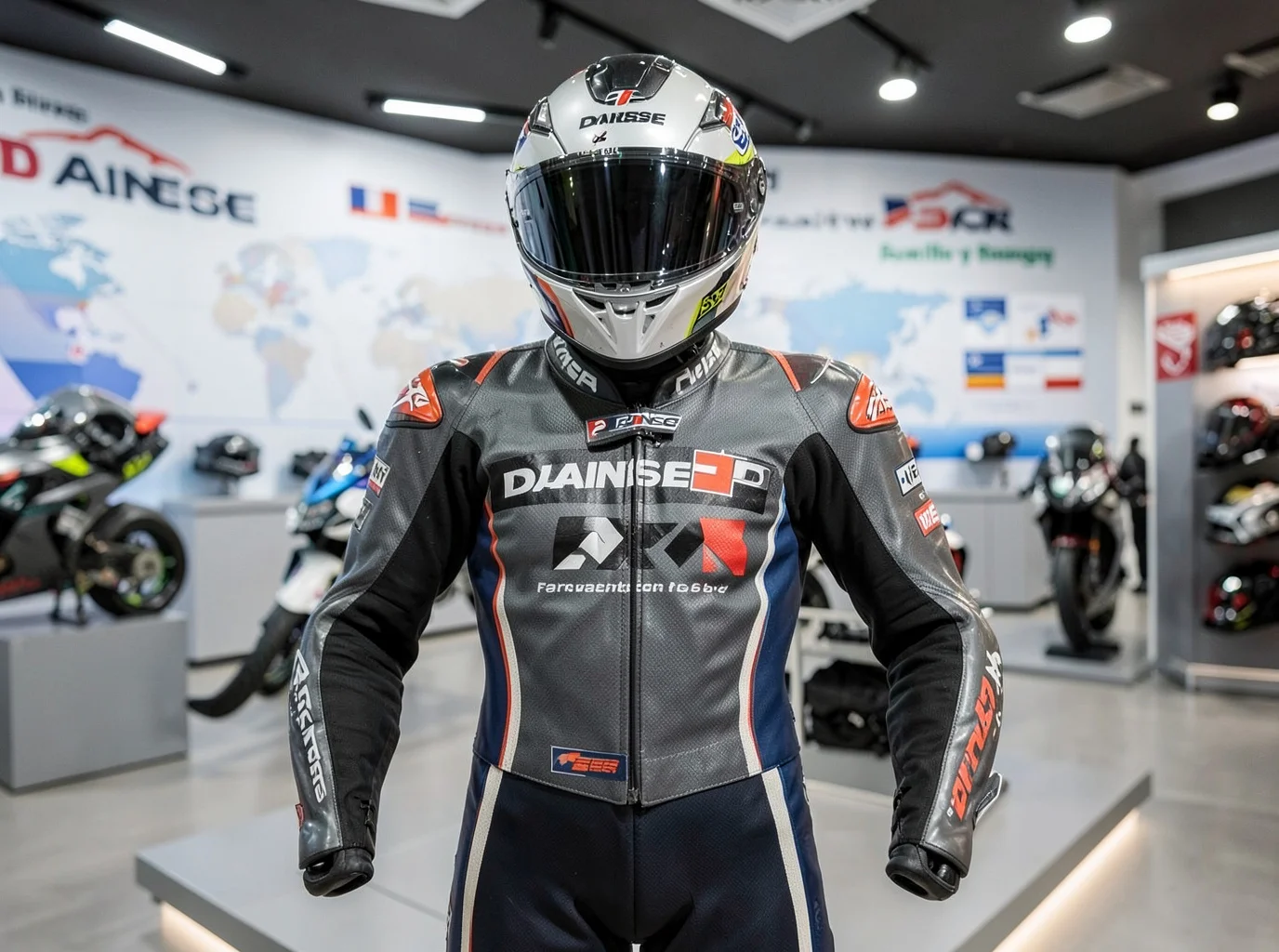
Fifty-plus years ago, a young Italian named Lino Dainese looked at motocross riders getting shredded on gravel and decided the industry needed better back protection. That was 1972. Today, Dainese is the technology backbone of modern motorcycle safety gear Italy has ever produced, and the brand every serious track rider measures everyone else against.
Dainese invented the back protector as we know it, and later became the first company to put a wearable airbag on a rider's body. That's the origin story of two safety technologies every other brand now copies. Dainese's D-air system reads crash data through sensors and deploys before impact. Competitors are still catching up on integration.
Who It's For
Dainese racing suits are built for riders who treat crash protection as non-negotiable—track day regulars, sportbike owners pushing real lean angles, and anyone riding a literbike hard enough that a low-side is a "when," not an "if." If you're still building confidence on a mid-displacement street bike, the airbag-integrated suits are overkill (and overspend).
Price Range and Positioning
Full race suits with D-air integration run well into four figures, firmly placing Dainese at the top of premium motorcycle apparel Europe has to offer. It's gear for riders who log serious track hours.
The Business Behind the Leather
Carlyle acquired Dainese in 2022 from Investcorp, and the company now operates under a portfolio that includes AGV helmets and TCX boots—meaning your suit, lid, and boots can all come from one engineering philosophy. Headquartered in Vicenza, Dainese products are sold in 96 countries through 50+ directly operated stores plus wholesale partners, backed by ISO 9001:2015 certification at the plant level. With estimated annual revenue in the mid-hundreds of millions, Dainese is an industrial-scale safety company that happens to make some of the best-looking Italian leather motorcycle suits on the grid.
runmotoapparel.com
Not every name that pops up when you're hunting for Italian moto gear has a storefront, a factory tour, or fifty years of racing pedigree. runmotoapparel.com is one of those trickier finds. There's no clean public company profile, no press kit, no "meet the founder" story. Instead, the domain leads to wholesale and retail activity tied to the broader Italian motorcycle apparel trade—the kind of supply-side world where clothing, helmets, goggles, and riding gear move between makers and buyers without much fanfare.
Why This Matters for Your Search
Italy's apparel manufacturing scene is massive and scattered. One directory alone lists over 1,000 wearing-apparel companies concentrated around Milan. Sites like ItalianModa exist specifically to connect buyers to Made in Italy Motorcycle Apparel suppliers of clothing, bags, shoes, and accessories through standard contact fields like city, phone, and WhatsApp.
If you're treating a site like runmotoapparel.com as a sourcing lead rather than a finished brand, run it through the same checklist any serious buyer uses: product type, MOQ, size range, materials, certifications, and lead time. Racing leathers made in Italy carry weight because of CE-rated abrasion and impact testing. The "Italy" label alone isn't proof. Without visible certifications or a direct contact channel, there's no way to verify craftsmanship claims.
Bottom Line
For track day gear, stick with brands that show their homework. If a Motorcycle Apparel supplier can't answer basic certification questions, it's not worth the risk on something protecting your skin at 140mph.
Alpinestars
Ask ten track day riders who they'd trust with their skin at 150mph, and half will say Dainese. The other half will say Alpinestars. It's a philosophical difference. Alpinestars built its empire on aerodynamics, boot technology, and a racing pedigree that stretches across nearly every motorsport discipline on earth. Dainese built its name on airbag deployment.
Sante Mazzarolo started the company in 1963 in Asolo, a small town in the Treviso province of Northern Italy. That's still where the core headquarters sits today, though the brand has offices in Los Angeles, Bangkok, and Tokyo. Alpinestars employs between 550 and 700 people worldwide, depending on the source, and operates as a proper S.p.A., an Italian public limited company, with €3.5 million in registered capital.
What Makes Alpinestars Different
The Alpinestars vs Dainese conversation usually comes down to fit philosophy. Alpinestars leans into aggressive, race-replica cuts designed for aerodynamic efficiency at speed. Their boots are arguably the strongest category in the lineup. Ask any MotoGP paddock, and you'll see Alpinestars on more feet than any competitor. This is a brand whose gear shows up in MotoGP, Formula One, World Rally Championship, WEC, V8 Supercars, and NASCAR. It's a motorsport footprint few Italian moto gear craftsmanship brands can match.
Who It's For
Sport riding jackets in Italy don't get much more race-focused than this. Alpinestars suits are for riders who want a tighter, more aggressive fit than Dainese's slightly roomier cuts. If you're chasing lap times on a literbike or you want Italian motorcycle boots with proven grip and torsional protection, this is the shortlist.
Price and Industry Standing
Full leathers sit in the same premium motorcycle apparel bracket in Europe as Dainese. Expect four-figure pricing for race-grade suits. Alpinestars has been an ANCMA/Confindustria member since 1979, and a 2026 Bloomberg report noted Asian private equity firms circling the brand with valuation interest near €1 billion.
SPIDI
Italian moto gear doesn't have to be a Dainese-versus-Alpinestars choice. SPIDI has been building racing leathers in Italy since 1977, out of Sarego, a small town in the Vicenza province—the same region where Dainese is based.
The brand started with racing gloves, not suits. That detail matters. SPIDI's focus on fit and dexterity over pure protection shows up in how their gear moves with your hands and wrists on the bike. From there, they expanded into leather suits, jackets, and the full track-day kit.
The Innovation Track Record
In 1996, SPIDI introduced the first CE-certified protectors in jackets. By 2005, they'd developed Biomechanic CE protectors, refining impact absorption years before it became industry standard. The brand has been active in MotoGP and WSBK paddocks for over 40 years, which is longer than most riders reading this have been alive.
Who SPIDI Is For
If you want Italian leather motorcycle suits with real motorsport pedigree but you're not ready to spend four figures on airbag integration, SPIDI covers that gap. The company exports 75% of production and keeps 25% in Italy, which tells you global riders already trust it—Americans just haven't caught up yet.
Price Positioning
Expect noticeably lower price points than Dainese racing suits or Alpinestars leathers. It's the practical pick for progressing riders who want proven CE protection without the premium Europe price tag.
Gimoto
Milan, 1890. The Mazzola family started making leather goods there, decades before motorcycle helmets existed. Gimoto carries that tradition forward as a small, family-run brand. Most riders outside Italy have never heard of it, and that's exactly how they want it.
Gilberto Mazzola refounded the brand in 1978, and today his sons Andrea and Daniele run the show. Gimoto is a made-to-measure house. Every suit gets built around your actual body, not a standardized size chart.
What Gimoto Does
The lineup covers one-piece race suits, supermoto gear, flat track kits, motocross apparel, and lighter air suits for warm-weather track days. You book an appointment at their Cassano d'Adda showroom near Milan, and they process the leather to fit you specifically. That's rare among Italian motorcycle gear brands, most of which sell off-the-rack sizing even at the premium end.
Who Should Look Here
Gimoto targets professional riders and serious amateurs who want custom racing leathers made in Italy without buying into a mass-market label. The company stays small on purpose. 2024 revenue landed around €2.1 million, with modest profit of roughly €42,800. That's boutique scale.
Getting Gear
Gimoto ships worldwide through store.gimoto.com, accepting PayPal, credit cards, and bank transfer. If off-the-shelf Italian leather motorcycle suits never quite fit right, this is where you go instead.
PMJ
The jeans you wear to the coffee shop before a track day can pull double duty as safety gear. PMJ built its entire brand around that idea. The company is based in Sant'Angelo in Vado, a small town in Italy's Marche region, and is the motorcycle-apparel arm of Domino Creations S.r.l. Domino has been sewing jeans for fashion labels for more than 30 years. The PMJ brand launched in 2009, applying decades of denim expertise to help riders look normal off the bike while staying protected on it.
The Twaron Difference
PMJ claims it was the first brand to get its entire lineup tested and certified. Their technical jeans use breathable Twaron® reinforcement fabric, tested to EN 13595-2 for abrasion resistance and EN 13595-4 for cut resistance, paired with CE-approved, adjustable, removable protectors. That's the same testing rigor you'd expect from racing leathers made in Italy, just built into denim instead of hide.
Who It's For
If you commute on a mid-displacement street bike and want casual clothes that won't shred on impact, PMJ fills a gap Dainese and Alpinestars don't touch. The lineup runs 16 men's models and 10 women's models, all produced entirely in Italy. Reach them through shop.pmj.it or [email protected].
Conclusion
Every seasoned track rider learns that the best Italian brand matches your riding level and budget. If you're chasing race-grade protection with airbag intelligence, Dainese racing suits earn their price tag. If aerodynamics and pro-level fit matter more, the Alpinestars vs Dainese choice depends on how aggressively you ride. And if you're building confidence on track days, SPIDI or Gimoto give you real Italian leather motorcycle suits without the professional price ceiling of Motorcycle Apparel.
Wear gear engineered for the crashes, heat, and speeds you'll encounter. So before your next track day, get honest about your skill level, try suits on if you can, and invest where the technology protects you.