I've sweated through a leather jacket at 32°C stuck in traffic, and I've felt a textile shell soak through like a sponge on a highway downpour at 110 km/h. Neither moment left me guessing; both left me rewriting my gear list. Choosing between leather and textile motorcycle jackets for all-season touring depends on the situation, and the right answer is usually learned the hard way.
I've logged the temperature ranges, the ride durations, the rain and road conditions where each material earns its keep—or fails you. By the end, you'll have a decision matrix built around your climate, your annual mileage, and your riding habits, plus real product picks across every budget. For brands, custom Leather and Textile Motorcycle Jackets can be specified around different riding climates.You'll get the jacket that fits how you actually ride.
Summer City Commuting: Breathability Comparison Between Leather and Textile Jackets at 25–35°C
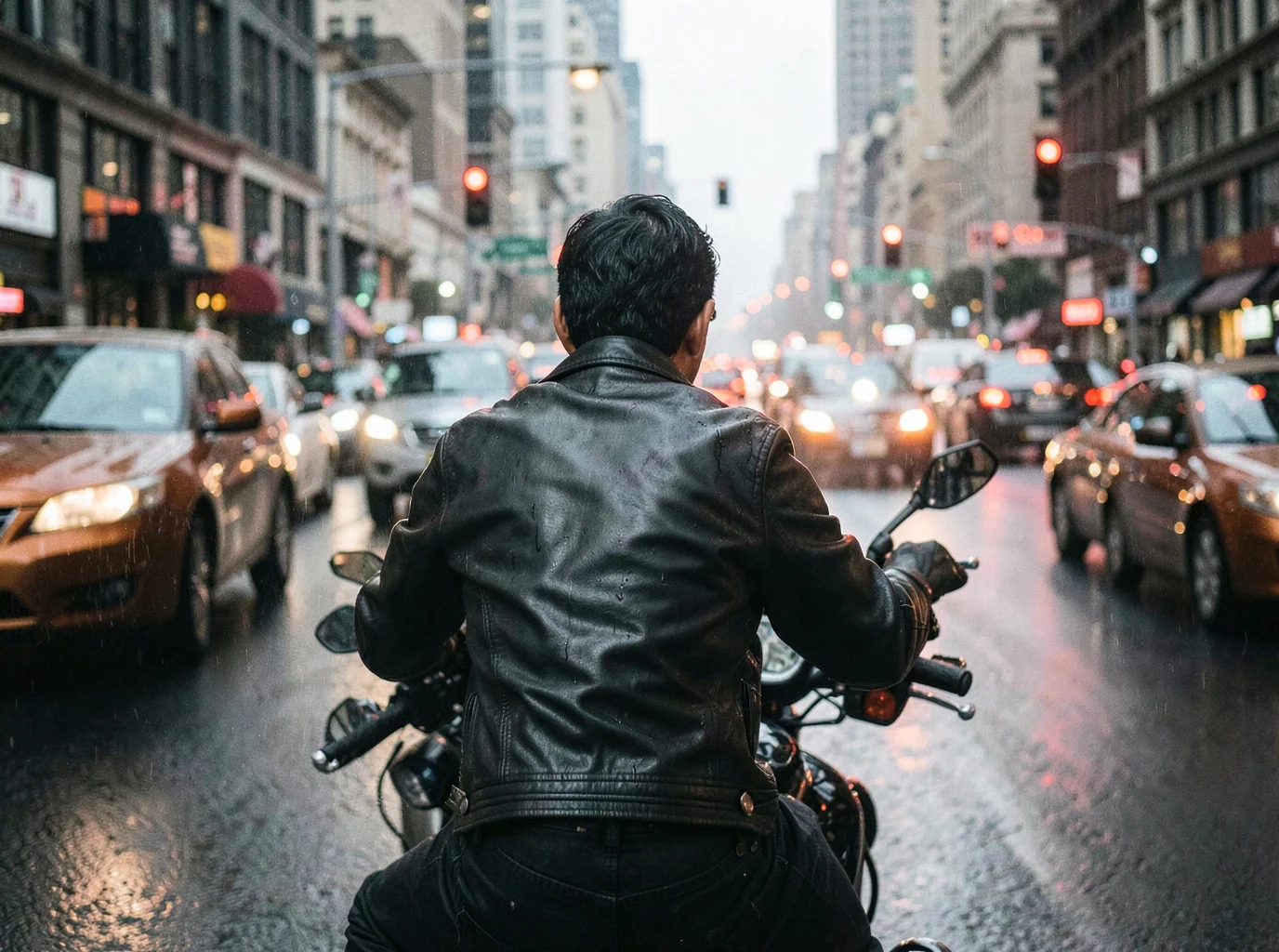
Stop-and-go traffic at 32°C in a solid leather jacket is a special kind of misery. I've timed it—by minute 20, sweat's pooling at my lower back, and by minute 40, I'm counting red lights like a prisoner counting days.
Mesh textile jackets outperform every leather variant on motorcycle jacket breathability in the 25–35°C range during short urban rides. Full-mesh jackets push 300+ CFM of airflow at riding speed, an entire order of magnitude beyond what perforated leather achieves through its punched-hole ventilation.
Temperature changes the outcome:
- Below 28°C: high-vent textile with open zippers feels nearly as cool as mesh
- Above 32°C: mesh pulls ahead
- Above 35°C: mesh dominates in dry heat; in humid conditions, the gap narrows slightly but mesh still wins
One summer riding test measured internal jacket temps directly. Standard textile hit 105–110°F (40.6–43.3°C) on the road, while mesh jackets ran 10–15°F cooler, peaking around 95°F. A separate lab test on leather-and-denim combo jackets backed this up under controlled conditions: at 200 Pa pressure, denim's air permeability beat leather outright.
Material ranking for hot commutes, from best to worst:
1. Full mesh textile
2. High-vent textile with strategic ventilation zippers
3. Perforated leather
4. Solid leather
For a 30–60 minute commute with stop-and-go traffic, full mesh is the clear winner.A custom wholesale price for Leather and Textile Motorcycle Jackets also matters at scale. If you want that leather look without cooking, go perforated—not solid.
Don't skip CE armor motorcycle jacket certification just because you're chasing airflow. Check for CE-rated shoulder and elbow protection even in your lightest summer mesh option. Ventilation and protection aren't mutually exclusive.
Highway Rain Riding: Waterproof Membranes, Separate Rain Suits, and Waterlogged Leather
Highway rain at 110 km/h gets driven into you. Wind pressure forces water through fabric weave in a way light drizzle never will. The main divide is whether the outer shell stays dry or gets soaked.
Laminated membranes bond the waterproof layer straight to the outer fabric, so the shell itself never soaks up water. You stay lighter, drier, and more comfortable through hours of highway rain. Fixed-liner jackets work differently. They're waterproof at the membrane level, but the outer shell can still get soaked, adding weight and cold retention exactly when you don't want it.
Separate rain suits—the PVC or PU pull-over kind—go for total waterproofing with zero breathability. They're 100% sealed, which sounds ideal until you're two hours into a highway stretch sweating inside a plastic bag. They shine on multi-day tours where you're ducking in and out of rain bands and want your main jacket protected underneath.
Check the hydrostatic head rating. 10,000mm with 10,000 g/m²/24h MVTR handles steady, moderate rain fine. But highway speeds push wind-driven water hard enough that you want 15,000mm minimum. Premium membranes—Ducati's H2OUT, for example—rate above 20,000mm H2O, built specifically for sustained high-speed, high-pressure rain.Bulk Leather and Textile Motorcycle Jackets can be built with different membrane specifications.
Leather doesn't fail suddenly. It gets heavier, colder, and takes forever to dry. In a layering system built for all-season touring, waterlogged leather is dead weight.
Quick threshold guide:
- Light rain, short trips: 5,000mm
- Steady rain, commuting: 10,000mm
- Highway, sustained downpour: 15,000mm+
- Comfort priority: breathable membrane over PVC/PU shells
Cross-Season Long-Distance Touring: Leather Abrasion Resistance vs Textile Jacket Weather Adaptability Over 300–800 km
Three hundred kilometers of mixed weather exposes every weakness a jacket has been hiding. Add temperature swings, unexpected rain, and multiple stops, and you're running a full stress test on both material categories at once.
The abrasion resistance gap has narrowed. Leather has always been the abrasion benchmark. Thinner material, higher per-millimeter protection, and natural wind resistance built in. But EN 17092:2020 changed the conversation. This standard tests abrasion, tear strength, and seam integrity through the Darmstadt slide test: any hole or tear over 5mm fails the material. AAA is the top classification, AA sits below it, A below that.
High-end textiles now hit AAA ratings that match leather in real-world abrasion testing. The Klim Badlands Pro A3 proves it: CE AAA under EN 17092-2, built from Cordura and Vectran, wrapped in a Gore-Tex membrane. That jacket combines high abrasion resistance and weather protection in one shell.
Leather still falls apart in rain. Untreated leather absorbs water, gets heavier, and loses breathability fast. That's exactly what you don't want on a multi-day route with shifting conditions. Textile jackets solve this with layering: a waterproof membrane, a breathable layer, a removable thermal liner, and ventilation zippers that open or close as temperature demands.A dedicated motorcycle jacket vendor can coordinate these options across one jacket range.
The Halvarssons Mora runs this system well. It's AA-rated, has a removable waterproof/breathable membrane, and uses HI-ART fabric claiming up to 500% better abrasion resistance over standard textile. Alpinestars' touring line heads the same direction: lightweight, waterproof, multi-climate ready.
Buying Threshold for 300–800 km Routes
Rain, big temperature swings, frequent stops: AA/AAA textile + waterproof membrane + removable liner
Dry climate, abrasion is the priority: leather, reinforced at high-wear zones
One jacket for everything: EN 17092 AA/AAA + waterproof membrane + ventilation + Level 2 armor at shoulders, elbows, back
$300–$500 buys a mid-tier jacket with Level 2 armor, back protection, and partial waterproofing. AAA-rated Gore-Tex builds cost more. For cross-season distance, textile wins unless you stay dry and prioritize raw abrasion protection.
Low-Temperature Morning and Evening Riding: Real Insulation Performance of Removable Thermal Liners and Layering Systems
Wind chill at speed does something a garage thermometer never shows you. Riding gear that feels warm standing still can leave you frozen ten minutes into a 5°C morning commute. That gap is exactly why removable thermal liner systems exist—and why understanding how they actually work matters more than the spec sheet.
How the zip-out thermal liner works. Most touring jackets ship with a zip-out thermal liner: full-sleeve, removable, zipped in when it's cold and pulled out when it's not. Some jackets go further with dual-liner systems—separate waterproof and thermal liners—giving you more granular control across seasons. Fill specs vary: 80g body insulation with 60g sleeve insulation is a common configuration, prioritizing torso warmth over limb bulk. That setup suits commuting and short-to-mid distance rides in spring/fall low-temperature conditions.
The liner alone isn't the answer. A thermal liner traps heat—it doesn't block wind. In 0–5°C riding, that distinction matters. Without a windproof outer shell, wind chill cuts straight through the insulation layer no matter how thick it is. The motorcycle jacket layering system that works follows three roles: a base layer wicking sweat off skin, a mid layer trapping still air, and an outer shell blocking wind and rain so heat doesn't get stripped away.
Temperature-based setup guide:
- 0–5°C: thermal base layer + insulated mid layer + windproof outer shell + gloves + boot covers
- 5–10°C: long-sleeve base + light insulation + wind-resistant shell or vest
- 10–15°C: light base layer alone, add arm warmers if needed
- Below 0°C: heavier mid-layer insulation, high-wind outer shell, full winter accessories
Riding wind strips heat faster than static comfort tests suggest—treat the outer shell as your real insulation multiplier, not the liner thickness alone.Wholesale Leather and Textile Motorcycle Jackets allow broader seasonal sourcing.
High-Speed Crash Risk: Comparing Abrasion Resistance and Armor Configurations in Leather vs. Cordura Textile Jackets
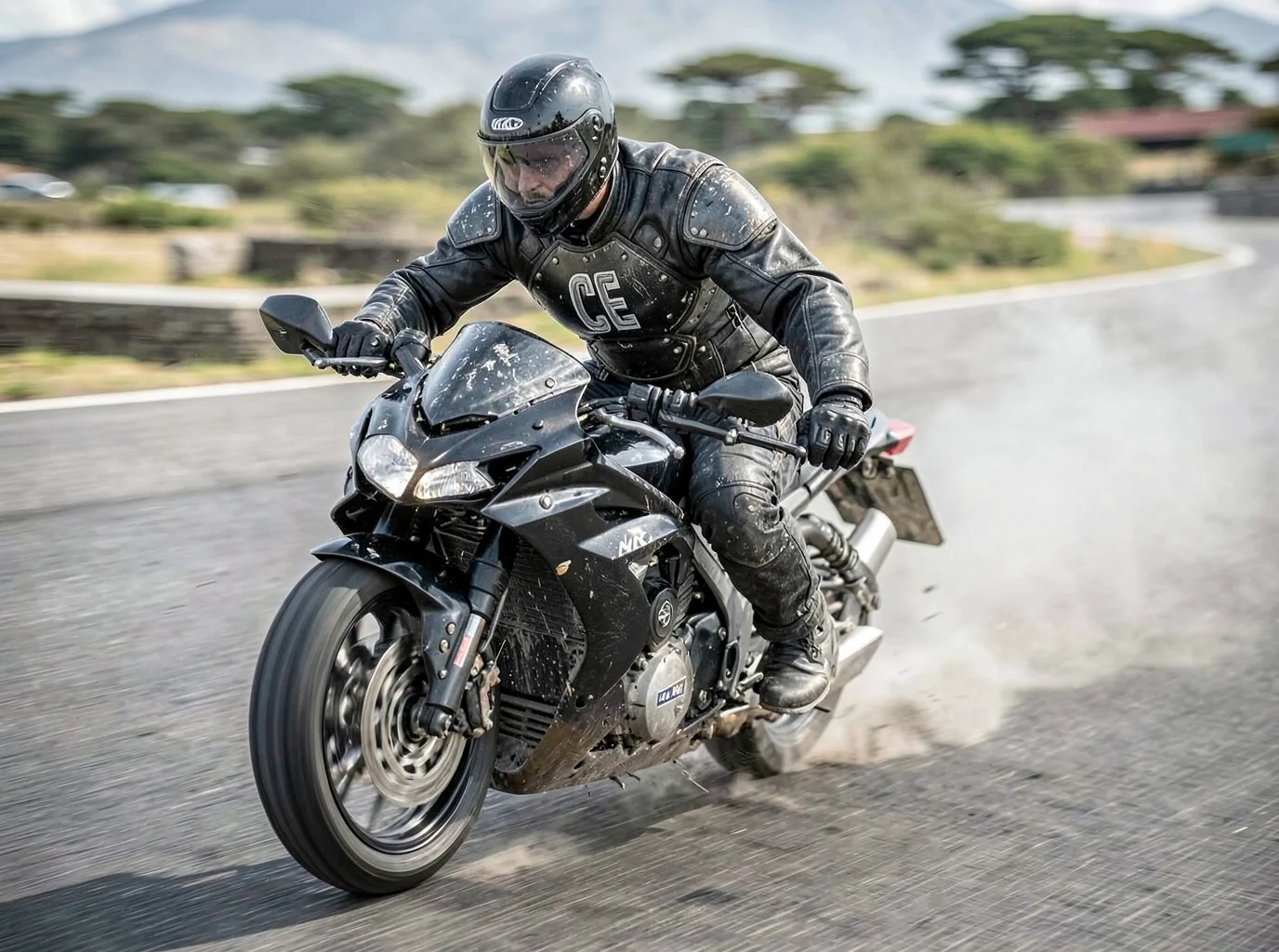
A slide at 120 km/h doesn't care what material tag is sewn into your jacket. It cares about how many meters of pavement contact it takes before something tears. That's the entire logic behind EN 17092, the standard that splits protective jackets into AAA, AA, A, B, C classes. Each class is rated on abrasion, tear strength, seam integrity, impact absorption, sleeve restraint, and post-wash dimensional stability.
Dainese's own testing breaks this down by speed simulation. AAA Zone 1 handles abrasion at 120 km/h, AA at 70 km/h, A at 45 km/h. For all three, passing means no hole larger than 5mm.
On raw abrasion resistance, leather still leads. FortNine's Taber testing puts competition-grade leather (1.2–1.6mm) at roughly 2,600 revolutions. Cordura Nylon Type 440 lands around 559 revolutions. Even lightweight leather (0.5–0.8mm) hits about 564 revolutions, matching Cordura 440 despite being thinner.
Cordura's real strength is certifiability. High-denier Cordura (500D+) passes EN 17092 consistently, which matters more for cordura vs leather jacket decisions than lab-only comparisons.
Buying combos that map directly to risk level:
- High-speed/track/high-risk highway: 1.2mm+ leather + AAA rating + Level 2 armor at shoulders, elbows, back
- Long-distance touring/mixed riding: 500D+ Cordura + AA/AAA + Level 2 armor same zones
- City commuting: A-rated textile or leather + Level 1/2 shoulder-elbow armor, with noticeably less margin in a high-speed slide
Checklist for your next spec sheet:
- Outer: full-grain leather 1.2–1.4mm or 500D+ Cordura
- Certification: EN 17092 AA/AAA
- Armor: EN 1621 Level 2 at shoulders, elbows, back
- Construction: double/reinforced stitching, patch reinforcement at wear points, no oversized mesh cutouts along slide zones
If you're comparing motorcycle jacket abrasion resistance in isolation, thicker leather wins. A hockey jacket factory manufacturer can also adjust leather weight, textile denier, and armor layouts.
If you're comparing whole-jacket safety, prioritize CE armor motorcycle jacket ratings (AAA/AA plus Level 2 protection) over the leather-vs-textile label itself.
Climate, Mileage & Use-Case Decision Matrix: Find Your Leather or Textile Jacket in 10 Minutes
Every ride I've regretted came down to one thing: I picked gear for the jacket I wanted, not the climate I actually ride in. This matrix fixes that. Match your climate, mileage, and primary use case below, and you'll land on the right material before your coffee's cold.
Climate-first rules:
- Rain >20 days/year: textile, laminated membrane priority. Waterlogged leather isn't a style risk—it's dead weight on your shoulders by hour two.
- Hot climate, frequent stop-and-go: textile with mesh panels or ventilation zippers. Leather's perforations can't compete with a panel you can fully open.
- Fair-weather, moderate climate, weekend rides: leather earns its keep here. Classic look, dry conditions, no compromise needed.
Mileage and use-case rules:
- Daily commuting + unpredictable weather: textile. Lighter, more packable, easier to layer for a shift in conditions mid-ride.
- Long-distance touring, adventure routes: textile. It's lighter than leather, so less fatigue over 300+ km. The waterproof membrane keeps you dry without a separate rain suit.
- Sustained speeds above 60 mph, track days, aggressive riding: leather, CE-rated, still the abrasion benchmark when a slide is the real risk.
Quick read: dry, short, track-focused, style-driven → leather. Wet, long, hot, unpredictable → textile. If you're stuck between the two, your annual rain days should break the tie.
Tested Product Candidates Across Different Budgets: From Entry-Level Commuting to High-End All-Season Touring
A $250 jacket and a $1,500 jacket both have to survive rain, heat, and a slide. The difference is how much margin you get.
$200–300, entry commuting. Tourmaster Horizon 2 or Bilt Explorer sit here. You get a textile shell, a basic waterproof rating around 5,000mm, a removable thermal liner, and CE Level 1 armor at shoulders and elbows. No mesh panels, no AAA rating. It's fine for a daily commute under 30 minutes in mild weather, but not built for highway rain or a 500km day.
$400–700, mid-tier commuter/short tour. REV'IT! Sand 4 or Alpinestars Andes v3 Drystar land here. The waterproof membrane is rated at 10,000mm+, with ventilation zippers front and back and Level 2 armor. This tier covers 80% of riders doing mixed commuting and weekend rides.
$1,000–1,500, dedicated touring textile. Halvarssons Mora fits this range. It's AA-rated under EN 17092, with HI-ART fabric claiming 500% better abrasion resistance than standard textile and a removable waterproof/breathable liner. This is where cross-season 300–800km routes stop being a gamble.
$1,500–3,000, high-end all-season touring. Klim Badlands Pro A3 tops this list. It's rated CE AAA under EN 17092-2, with a Cordura and Vectran shell and a Gore-Tex membrane. You also get a full layering system, highway-rated abrasion protection, and sustained rain performance above 15,000mm equivalent.
Quick budget map:
- $200–300 → entry commuting only
- $400–700 → mixed commuting + weekend touring
- $1,000–1,500 → cross-season long-distance
- $1,500–3,000 → all-season, all-condition touring
Long-Term Maintenance and Total Cost of Ownership: Leather Care vs. Textile Waterproofing Breakdown
Nobody budgets for maintenance until the jacket starts failing. That's where leather and textile split into two completely different cost models.
Leather runs on a fixed schedule. Condition every 3–4 months in dry climates, every 6 months in humid ones. Conditioner runs $15–$35 a bottle, and one bottle covers 18–24 months of use. Skip the routine and you're not just risking stiffness—you're cutting leather's lifespan by 30–50%. Predictable spend, predictable decay curve.
Textile DWR coatings work differently—they degrade on a usage counter, not a calendar. Standard DWR holds up for 20–40 washes. Premium fluorine-free formulas drop to 15–25. Some layered DWR treatments lose all water resistance after 5 washes. Home re-treatment often kicks in after 3–5 machine washes, and most require a 20-minute low-heat cycle to reactivate the surface.
The bottom line: leather costs low and steady. Textile costs spike the moment washes pile up—so track your wash count, not just the calendar.
Conclusion
After 15,000 miles switching between leather and textile across four seasons, the right jacket comes down to your riding pattern. If you're chasing the durability comparison after a slide, leather still wins on raw abrasion resistance. A quality Cordura jacket gets a lot closer once you factor in CE armor placement and real-world crash data. The bigger difference is layering. A textile jacket with a proper layering system adapts from a 5°C dawn ride to a 35°C traffic crawl, something no single-material leather piece can match.
Stop scrolling for more opinions. Pull up the decision matrix above, plug in your climate zone and annual mileage, and order accordingly.For repeat orders, custom Motorcycle Jackets simplify range planning.