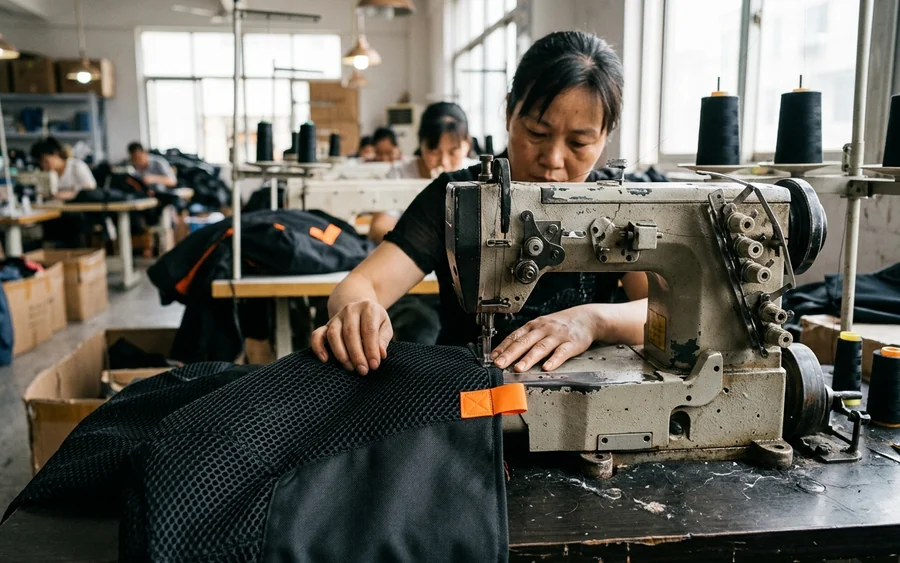
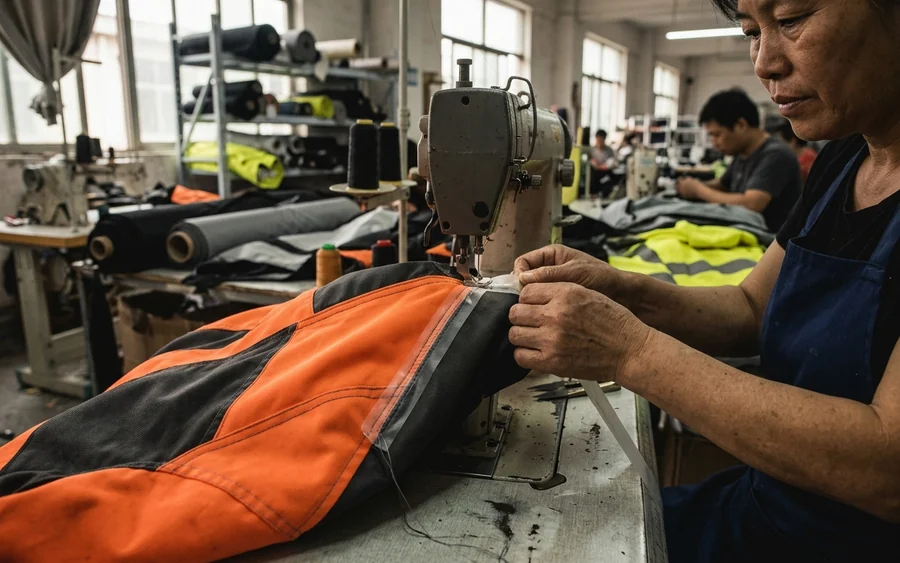
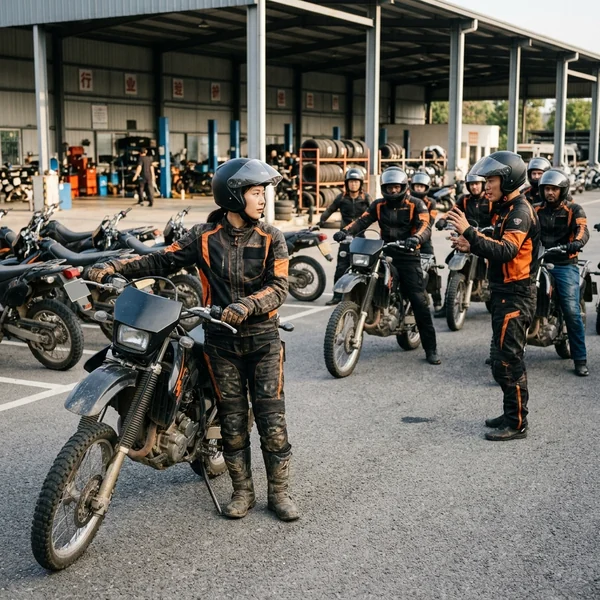
I've commuted on my motorcycle through 6am fog and 6pm gridlock for three years now, and I've tested both a Kevlar-lined hoodie and a CE armor motorcycle jacket in the exact same conditions: same 45-minute route, same summer swelter, same sudden downpour. Matching your gear to your actual commute matters more than the marketing copy. In the next few sections, I'll break down what happens when you walk into a client meeting in riding gear, how much airflow a breathable motorcycle jacket delivers at speed, and why some "abrasion resistant hoodies" fail CE testing. You'll walk away with a decision matrix that tells you what to buy in three minutes.Brands can source custom Motorcycle Hoodies for commuter-focused collections.
The 45-Minute Morning and Evening Commute: The Truth About Motorcycle Riding Gear
A cotton hoodie offers basically zero abrasion protection. Full stop. A kevlar lined hoodie earns "road-ready" status only when it pairs an aramid or Dyneema layer with CE-rated armor underneath.
The real dividing line is EN 17092. Look for AA or AAA certification. That means the garment passed actual abrasion, tear, and seam-burst testing, not just marketing language like "protective" or "armored."
Numbers make this concrete. In a slide-test scenario, a single-layer Kevlar lining holds up for 2–4 seconds. Plain denim or cotton? Under 1 second. At commuter speeds during a low-speed tip-over, that gap is the difference between skin and no skin.
Armor placement matters just as much. You want CE armor in your shoulders, elbows, and back. Without it in all three spots, "thicker fabric" won't cushion impact. CE Level 1 caps transmitted force around 18 kN (24 kN max per hit). CE Level 2 transmits less force to your body, so it's the smarter pick for daily riders.
For a 45-minute commute with highway stretches or elevated roads, a CE armor motorcycle jacket typically wins. A custom wholesale price for Moto Riding Jackets helps control larger orders.
You get better ventilation, full-sleeve abrasion coverage, and complete armor. If your route stays low-speed and urban, an AA-rated hoodie works — but only with full armor and a genuine abrasion liner, not a hoodie wearing a costume.
Abrasion & Impact Protection: CE Certification Levels Matter More Than the "Kevlar" Label
Your gloves tell the same story your jacket does — the fabric name on the tag isn't the protection spec. I learned this the hard way after buying a pair of "Kevlar-reinforced" gloves with zero impact rating on the label.
"Kevlar" is a material name, not a test result. DuPont's own product sheets confirm this: their published performance data comes from how the aramid fiber scores under EN 13594 testing, not from the fiber alone. So a kevlar-lined hoodie or a pair of gloves stuffed with aramid still needs a CE number to mean anything.
Here's what EN 13594 actually measures for motorcycle gloves:
Level 1: average transmitted force ≤7 kN, single peak ≤9 kN, knuckle impact protection optional
Level 2: average transmitted force ≤4 kN, knuckle impact protection mandatory
Abrasion resistance follows the same tiered logic. Level 1 needs a single sample to survive ≥3.0 seconds, with a four-sample average of ≥4.0 seconds. Level 2 demands ≥6.0 seconds single, ≥8.0 seconds average. That's double the durability.
Look for the code "KP" on the label — it confirms knuckle-impact protection passed. Pair that with EN 13594:2015 and a Level 2 rating, and you've got hands covered on top of whatever CE armor motorcycle jacket or hoodie you're already wearing.Bulk Motorcycle Hoodies can also be specified with certified armor.
Summer Heat Field Test: Ventilation Structure Determines Comfort
After three summers of sweating through both kinds of gear, the thing that surprised me most: the label on the tag has almost nothing to do with how hot you feel at a stoplight. What matters is the microclimate — that thin layer of air trapped between your skin and the fabric. Its temperature, humidity, and airflow decide whether you're comfortable or drenched by the time you park.
Your skin needs that layer sitting around 28–30°C to stay in thermal balance. Comfort researchers define the sweet spot more precisely: roughly 32°C, 50% (±10%) relative humidity, and airflow of 25±15 cm/s. No fabric — kevlar lined hoodie or textile motorcycle jacket — drops your inner air below outdoor temp. All it can do is help heat and moisture escape faster.
That's where ventilation structure beats garment category every time:
Closed construction traps heat and sweat, spiking that stuffy feeling.
Open construction — mesh panels, large-knit weave, underarm/back vents — lets air exchange constantly, keeping skin temp and humidity noticeably lower.
Loose-fit tailoring creates a bigger air layer, which improves the breeze sensation even without extra vents.
High-porosity fabric boosts air permeability, driving more convective and evaporative cooling.
So before buying any abrasion resistant hoodie or breathable motorcycle jacket, skip the name.A reliable motorcycle jacket vendor can match ventilation to the target climate. Check the vent count, mesh placement, and fit.
Sudden Rain and Cold-Weather Riding: A Jacket Offers More Complete Wind and Rain Coverage
Rain doesn't wait for your commute schedule, and this is where the kevlar lined hoodie falls apart fast. A hooded jacket built for weather beats a hoodie every time thanks to sealed seams and full-body coverage.
The number that matters here is hydrostatic head. 5,000mm handles light rain. For moderate-to-heavy downpours you want 10,000mm and up. 15,000–20,000mm is your bar for sustained storms. Finisterre's Stormbird hits 20,000mm with 15,000 g/m²/24hr breathability. That's serious weather protection. Decathlon's Raincut sits at 5,000mm with taped seams, good for an hour or two of light rain at commuting speeds up to 70 km/h.
What actually keeps water out comes down to a few details. An adjustable hood seals against your helmet instead of flapping loose. Elastic or adjustable cuffs stop water running down your wrist. The drawstring hem locks out wind and rain at the waist. A storm flap over the zipper blocks direct water and wind entry. Fully taped seams leave no stitching gaps for leaks.
A textile motorcycle jacket with hip-length cut also covers your lower back in riding position, which a hoodie's shorter hem can't match. Add reflective strips for low-visibility rain rides. Pit zips stop you from sweating under a sealed shell. That's real commuter motorcycle gear.Wholesale Moto Riding Jackets can cover multiple weather specifications.
Heading to the Office, Riding the Subway, and Attending Meetings
Nobody wants to explain armor plating to a client in a conference room. The real tension is how fast you can shed the riding layer without looking like you just walked off a track day.
A commutable base layer, a quick-swap outer layer, and shoes you change once you land make up the system that works. Ride in with a shirt or knit top under your CE armor motorcycle jacket or kevlar lined hoodie, unzip at the door, and you're left with something office-appropriate underneath. This is the cheapest, most reliable fix I've found in three years of testing motorcycle protective gear casual enough to survive a 9am standup.
Subway platforms and packed trains punish bad fabric choices. Stick to breathable, wrinkle-resistant materials—cotton, linen blends, lightweight wool, seersucker—paired with pants that flex when you're standing for twenty minutes with a backpack digging into your shoulder. Swap that backpack for a single-strap bag if sweat stains are a problem; it's a small change that solves a real discomfort.
Meetings raise the bar slightly. Business casual is the safe baseline: slacks, a collared shirt, a low-key blazer, closed-toe shoes that don't scream "just rode here." Client-facing meetings might push you toward a full jacket. Either way, my go-to urban riding gear bag holds one removable outer layer, one non-wrinkle top, comfortable pants, walkable shoes, and a backup pair stashed at my desk.A motorcycle apparel manufacturer can develop matching Motorcycle Hoodies for the same commuter range.
Matching Gear to Three Real Commute Routes: Short, Long, and Highway
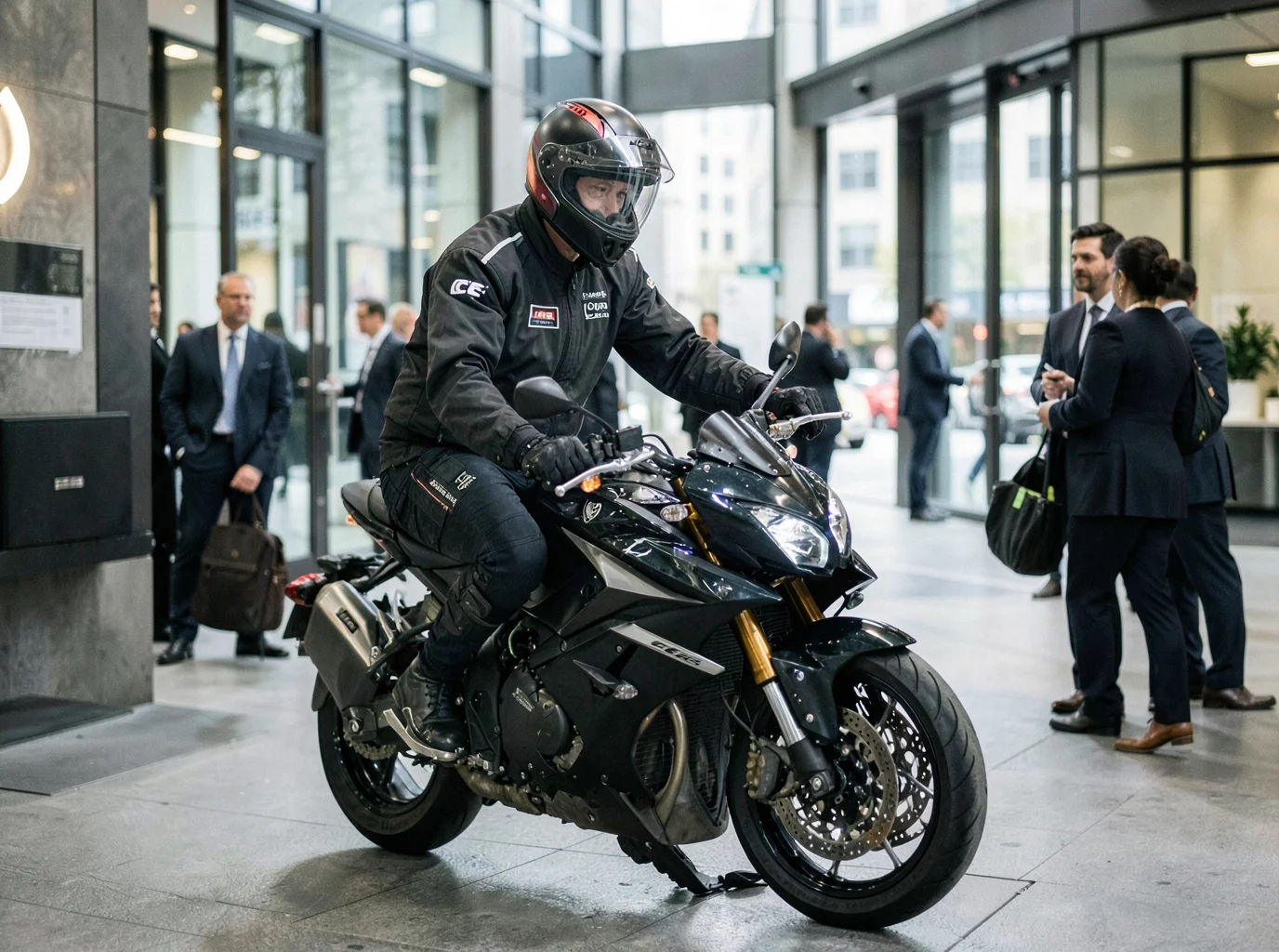
Distance changes which gear survives your commute. I've logged three different route types over three years, and daily mileage decides the category, not personal preference.
Short commute (roughly 10–40 miles/day, mostly city streets): A kevlar lined hoodie earns its keep here. Low speeds mean lower slide-test exposure, and the loose, breathable knit stays comfortable through stop-and-go traffic. This is also the range where "office-appropriate" matters most — you're in and out of the jacket fast, so lighter weight wins.
Long commute (roughly 40–80 miles/day, mixed surface conditions): This is CE armor motorcycle jacket territory. Longer exposure time raises your odds of encountering unpredictable traffic, so full-sleeve abrasion coverage and CE Level 2 armor in shoulders, elbows, and back stop being optional. A textile motorcycle jacket with pit zips also handles the temperature swings a 60–80 minute round trip throws at you.
Highway-heavy routes: Skip the hoodie entirely. Sustained speed above 50 mph demands a breathable motorcycle jacket with reinforced motorcycle armor pockets and sealed seams. Wind chill and impact force both scale with velocity, and no aramid knit compensates for that math.
Quick-reference matrix:
- 10–40 miles, urban/stop-go: kevlar lined hoodie, AA-rated, full armor
- 40–80 miles, mixed roads: CE armor motorcycle jacket, Level 2, textile shell
- Highway-dominant, any distance: breathable motorcycle jacket, sealed seams, Level 2 armor non-negotiable
Match your actual route, not your ideal one, and the gear choice stops being a guessing game.
Price, Weight, and Durability: Purchase Cost Isn't the Same as Cost-Per-Commute
Sticker price lies to you. The real cost is cost-per-commute, and that math depends on fabric denier and how long the gear survives.
Across the $229–$595 range for high-strength commuter gear, weight swings from 1.8 lb to 4 lb 9.8 oz. That gap comes from fabric and construction, not capacity. Denier tells the durability story: 100D–420D nylon is standard, with 500D reinforcement showing up in tougher builds. Gear above $200–$500 uses 400D+ high-tenacity nylon or Ultra/DCF, and yes, you'll pay a premium — often $395–$400 — for that lightweight-but-tough combo.
Do the math. A $300 jacket lasting 3 years at 250 commutes per year costs about $0.40 per ride. The same jacket wearing out in 1.5 years jumps to $0.80 per ride. Cheap isn't cheaper.
Practical buying targets:
- Light daily riding: 100D–210D, $200–$320
- Heavy/frequent commuting: 210D–420D+, $300–$500+
- Max durability: 1,050D nylon/CORDURA, ~2.8–2.9 lb
If you ride often, spending an extra $50–$150 on higher denier almost always lowers your real cost per commute.
Three Practical Product Directions: Matched by Protection, Ventilation, and Everyday Look
Three years of switching gear taught me to stop shopping by brand name and start shopping by direction. There are really only three buying paths worth considering.
Direction 1 — Protection-first. Get a CE armor motorcycle jacket certified under EN 17092 AA/AAA, with Level 2 armor pockets locked into the shoulders, elbows, and back. Look for 500D+ nylon or true Cordura with taped seams. This is your highway and long-commute pick, no shortcuts here.
Direction 2 — Ventilation-first. Prioritize mesh side and back panels, 4-way stretch, and moisture-wicking, quick-dry construction. Fabric in the 110–140 gsm range does the micro-mesh cooling work; 140–160 gsm knit with UPF 50+ blocks over 98% of UV (AATCC 183 tested). This is the breathable motorcycle jacket lane for summer commutes, when a kevlar-lined hoodie starts feeling like a sauna.
Direction 3 — Everyday-appearance. Armor stays limited to shoulders, elbows, and forearm, while everything else keeps a toned-down, low-key cut with reinforced stitching over exposed padding. This is where a kevlar-lined hoodie or textile motorcycle jacket doubles as office-ready urban riding gear.
Decide in three minutes whether a hoodie or jacket fits your commute.
Temperature does most of the deciding here.
By temperature:
- 18–25°C: Hoodie wins. No outer layer needed.
- 12–18°C: Either works, but a light jacket edges ahead if morning-to-evening swings are wide.
- 5–12°C: Jacket, windproof. A kevlar lined hoodie belongs under another layer now.
- Below 10°C: Never ride solo in a hoodie. Layer it under a windproof shell.
- Windy, rainy, or a long walk from the subway exit: Jacket, full stop. Water-resistant fabric matters more than style here.
By feel:
- Short walks, brief indoor/outdoor switches under 10 minutes → hoodie.
- Long waits on windy platforms or extended riding time → jacket, since the outer shell earns its keep blocking wind.
- Heavy office AC plus big outdoor temp gaps → a removable light jacket beats a thick hoodie for flexibility.
Fabric weight reference:
- Hoodie: 200–260 gsm (layering weather), 280–320 gsm (most versatile, daily default), 340+ gsm (cold but stuffy).
- Jacket: light shells kick in around 50–60°F, mid-weight quilted/fleece around 45–54°F, insulated/down below 40°F.
Buy a hoodie if most commute days run above 15°C, your route is subway-and-elevator light on wind/rain, and you want office-casual ease. Buy a jacket if you regularly hit below 12°C, deal with wind, rain, or extended riding/waiting time, and want an outer layer that covers more weather than a hoodie ever will.
If you can only own one outer piece, get the light windproof jacket. It stretches into hoodie-comfort territory on mild days and still covers you when temps drop or rain hits. If you're building a mid-layer instead, a 280–320 gsm hoodie covers the widest range of commuting days on its own.
Scenario Decision Tree: Quickly Rule Out the Wrong Choice Based
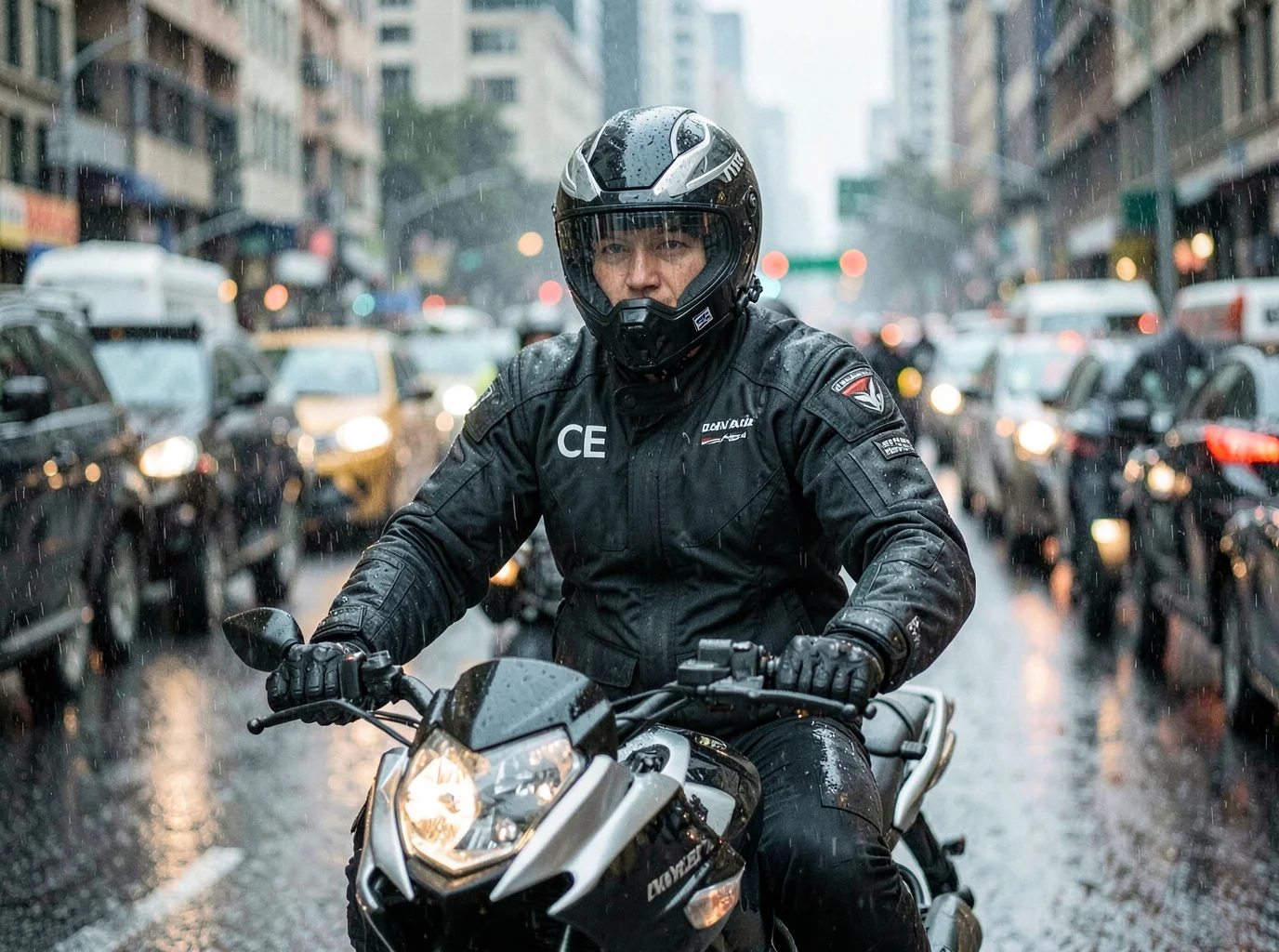
Distance draws the first line. 8 miles one-way is your marker. Under that, you're in hoodie territory: short exposure, quick layer swaps, office-friendly. Past 8 miles, lean toward the CE armor motorcycle jacket, since longer exposure raises both weather risk and slide-test odds.
Weather kills the hoodie option fast. Rain, snow, or high heat all push you toward jacket-grade weatherproofing. A kevlar lined hoodie has no sealed seams to fall back on.
Quick exclusions:
- Long commute + frequent rain/snow/heat + rigid daily office attendance → jacket, no debate
- Short commute + stable weather + strict dress code → hoodie under a removable shell
- Night riding or poor lighting → skip the hoodie regardless of distance; visibility gear on a textile motorcycle jacket wins
Rigid schedules and fixed-desk jobs favor gear you can shed fast: a jacket with quick-release armor. Flexible arrival times tolerate hoodie comfort longer.
Pre-Order Spec Checklist: How to Avoid Buying Hoodie With Padding but No Real Full-Suit Protection
Plenty of "protective" hoodies are just a knit shirt with foam pockets sewn in. Before you pay, get the seller to answer six questions in writing.
Ask the seller for these, in order:
EN 17092 rating on the full garment. A "CE armor" mention on the tag doesn't prove the whole jacket is rated.
EN 1621-1 (shoulder/elbow) and EN 1621-2 (back) certificates, Level 1 or 2 stated.
Coverage diagrams by size (S/M/L/XL) showing where the padding sits when you raise your arms or bend forward.
Outer fabric specs: Cordura, Kevlar, or aramid-blend, with the abrasion and tear numbers. "Reinforced" on the product page isn't a spec.
If there's no garment-level cert and only a photo of the shoulder pad, that's a costume, not a motorcycle protective gear casual option.
Conclusion
After 45 minutes of rush-hour traffic, three rainstorms, and one sweaty August commute, your daily route decides the winner. If you're walking into meetings straight off the bike, a kevlar lined hoodie earns its keep—just verify the CE armor rating before you buy, because "reinforced" and "protected" aren't the same word. For 10+ mile rides, highway speeds, or real weather, a proper riding jacket's coverage and abrasion resistance is the difference between a scare and an ER visit. Run your commute through the decision matrix above, check the spec sheet against the verification checklist, and buy for the ride you actually have.Private-label Moto Riding Jackets also fit repeat collection planning.